
Frequent Urination at Night: Why You Keep Waking Up to Pee
What may be behind the night-time bathroom trips, and what to bring to your doctor.
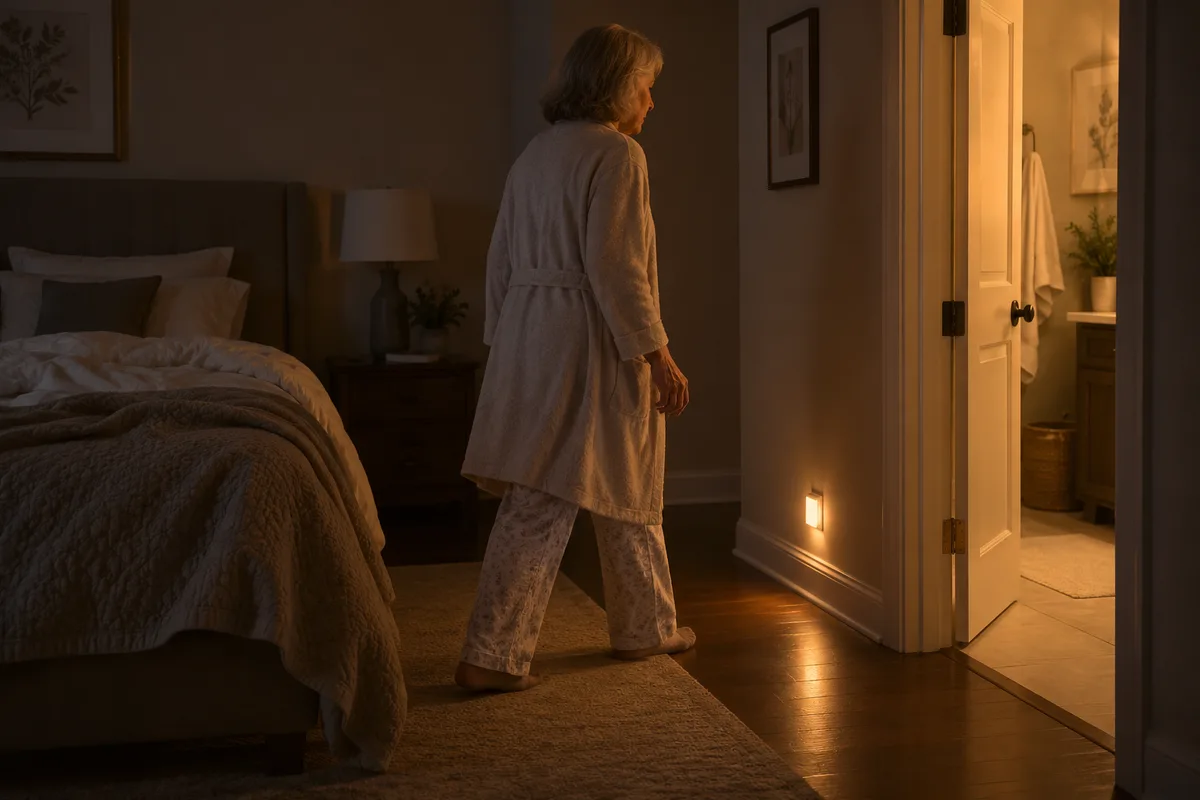
Frequent urination at night is more than a bathroom problem. You wake, walk there in the dark, come back to bed and find that the sleepy feeling has gone.
For some people this happens once. For others it breaks sleep two, three or more times. After enough broken nights, the bathroom trips and the sleep problem can become hard to tell apart.
The medical name is nocturia: waking during your main sleep to urinate. It has several possible causes, and sometimes more than one is involved.
There is also a question we do not ask often enough. Did your bladder wake you, or did something else wake you first, so that you only noticed your bladder once you were awake?
That difference can change what helps.
What counts as frequent urination at night?
Nocturia means waking from sleep to urinate. The Urology Care Foundation says that getting up two or more times a night is not normal and is a clear sign of nocturia. It also says nocturia is a sign that something is going on in the body, not a disease in itself.
Cleveland Clinic gives a gentler line for booking a visit: waking more than once or twice to pee, and finding it bothersome.
The count is not the whole story. One trip followed by instant sleep may cost you little. One trip followed by an hour awake can cost you a lot.
Someone who passes a large amount of urine three times a night may have a different problem from someone who wakes often with a strong urge but passes only a little.
So the useful question is not only how many times. It is what was happening before, during and after each waking.
Why do I pee so much at night but not during the day?
This is common, and it does not always mean your bladder turns overactive when the sun goes down.
Sometimes the issue is how much urine your body makes at night. The term is nocturnal polyuria: instead of urine production easing off during sleep, a large share of the day's urine is made overnight.
There can be a simpler reason as well. Some people find their ankles swell during the day. When they lie down, that fluid may move back into circulation and the kidneys have more to process. It is one reason Cleveland Clinic lists leg elevation and compression stockings among the things people try.
And what you drink, and when, matters. Cleveland Clinic lists too many fluids before bed, especially alcohol, carbonated drinks or caffeine, as a cause.
So if you pee much more at night than by day, do not assume the bladder itself is at fault.
Is your bladder waking you up, or were you already awake?
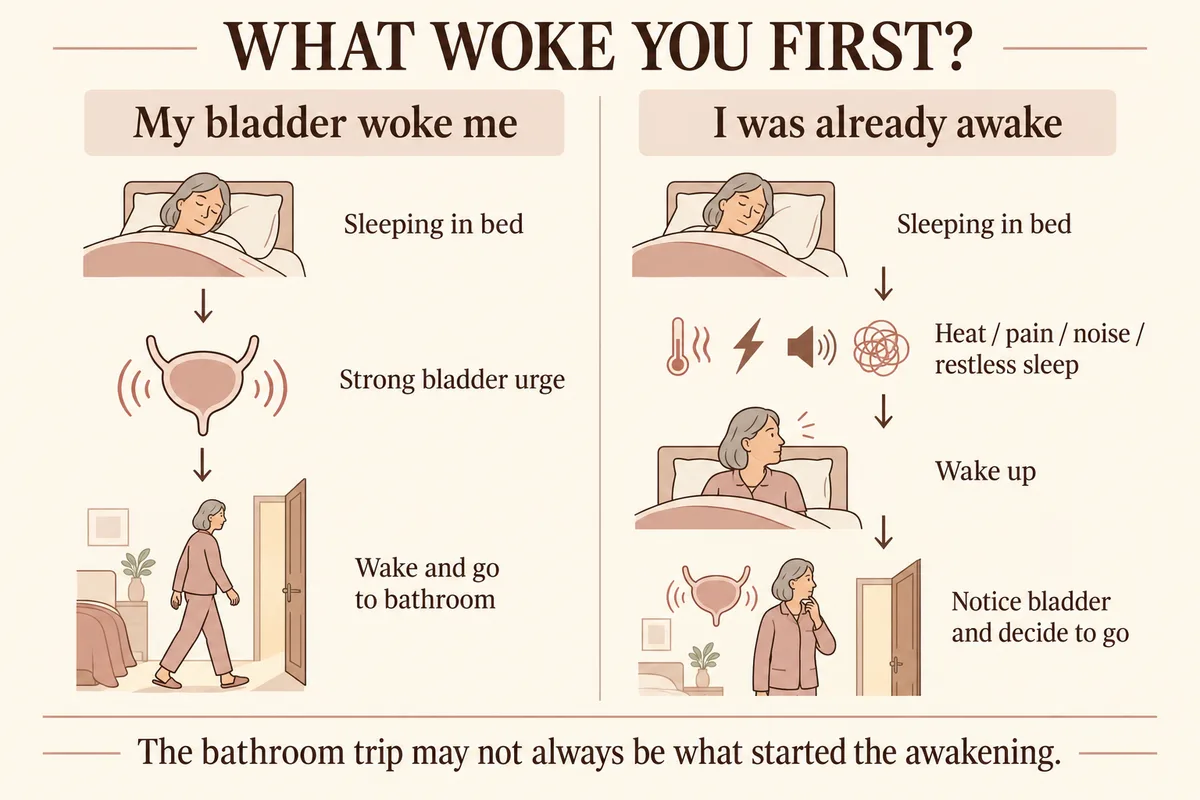
Picture two nights.
On the first, you sleep soundly until a strong bladder sensation wakes you. There is no doubt what woke you.
On the second, you wake because you are too warm, in pain, disturbed by a noise or awake for no clear reason. Once awake you think, well, I might as well go to the toilet.
Those are not the same problem.
Sleep disorders sit on Cleveland Clinic's list of causes, including obstructive sleep apnea and restless legs syndrome. That can set up a frustrating loop. Something disturbs your sleep. You become aware of your bladder. You get up, and the light and movement wake you further. You return to bed more alert than before.
Now the trip is part of the sleep disruption, even if your bladder was not what woke you in the first place.
A few nights of notes can sort this out. Write down when you went to bed, when you woke, why you think you woke, whether the urge was strong or mild, and how long it took to fall asleep again.
Our sleep diary guide shows how, and our article on why you wake up at 3 a.m. covers the other reasons for waking.
What causes frequent urination at night?
There is no single cause. Cleveland Clinic's list of causes includes:
- Too many fluids before bed, especially alcohol, carbonated drinks or caffeine.
- Medicines that contain a diuretic, often called water pills.
- Diabetes and high blood pressure.
- Heart disease or heart failure.
- Bladder obstruction and urinary tract infections.
- Sleep disorders, including obstructive sleep apnea, and restless legs syndrome.
- An enlarged prostate in men.
- Pregnancy, childbirth, menopause and pelvic organ prolapse in women.
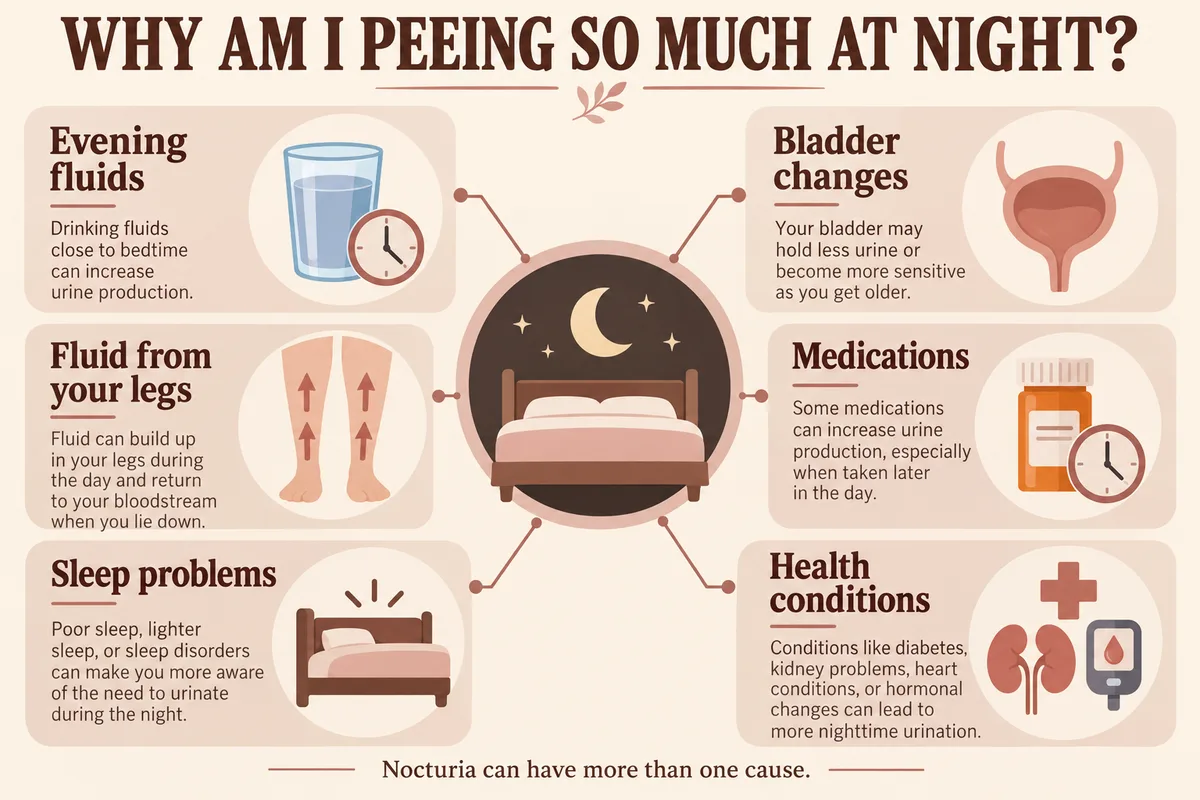
An overactive bladder, one that gives sudden, strong urges to go, is another possibility. This is why "just drink less water" is not a complete answer.
Diabetes. Needing to urinate more often and feeling very thirsty are common diabetes symptoms. Night-time trips do not mean you have diabetes. But if you are also unusually thirsty or passing large amounts of urine, ask for it to be checked.
Men. An enlarged prostate is on the same Cleveland Clinic list. If you also have a weak stream, difficulty starting, or a feeling that your bladder does not empty, tell your doctor.
Sleep apnea. The NHLBI lists waking up often during the night to urinate among its symptoms. If you also snore loudly or wake gasping, our guide to snoring versus sleep apnea explains the difference, and a clinician can decide whether a sleep study is worth doing.
The point is that nocturia is a symptom, not a diagnosis. Finding the cause matters more than simply suppressing the symptom.
Can menopause make nighttime urination worse?
It can be part of the picture.
A consensus paper on the genitourinary syndrome of menopause describes a group of symptoms caused by falling estrogen in the vagina, urethra and bladder. Its list of urinary symptoms includes urgency, increased frequency, nocturia and recurrent urinary tract infections. The same paper notes that estrogen receptors are present in the urethra and bladder.
That can overlap with another problem: disrupted sleep. Someone may be dealing with hot flashes or night sweats, lighter sleep and more urinary urgency at once.
Again, it helps to work out what comes first. If you wake hot and sweaty and then decide to use the toilet, the approach may differ from being woken by a very full bladder. Our guide to perimenopause insomnia covers the sleep side.
The paper says a systematic review found vaginal estrogen, compared with placebo, reduced urinary urgency, frequency or nocturia. Whether any hormone treatment suits you depends on your medical history, and the paper advises particular care after breast cancer. That is a conversation for your doctor, not something to start on your own.
How to stop peeing at night so often
No single trick works for everyone, because the answer depends on the cause. These are worth looking at.
Move your fluids earlier. Cleveland Clinic suggests cutting back on fluids before bed. The aim is not to get dehydrated. It is to avoid taking a large share of the day's fluids just before sleep.
Look at evening caffeine and alcohol. Cleveland Clinic names alcohol, carbonated drinks and caffeine as fluids to watch. Timing may matter as much as the total.
Think about your legs. If your ankles or lower legs swell during the day, Cleveland Clinic lists elevating your legs while sitting, and wearing compression stockings, as ways to help with fluid distribution. Ask your doctor first if you have heart, circulation or kidney problems, or leg pain. Whether stockings are right depends on the person.
Ask about medicine timing. Cleveland Clinic suggests taking diuretics when you wake up, or at least six hours before bedtime. Do not move or skip a prescribed dose yourself. Ask your doctor or pharmacist whether timing could be part of the problem.
Look beyond the bladder. If sleep apnea, diabetes, an overactive bladder, an enlarged prostate or menopause is involved, treating that may work better than managing the trips.
"Natural" should not turn into a shelf of supplements while the reason you are waking stays unexplored. Fluid timing, less evening caffeine and alcohol, leg swelling and better conditions for unbroken sleep are sensible places to start.
Keep a bladder diary for a week
Cleveland Clinic names a bladder diary, recording fluid intake, bathroom trips and timing, as a tool for working out nocturia. It is unglamorous and it works better than "I am always up at night".
For several days, write down:
- What and when you drink, and any alcohol or caffeine.
- When you urinate, and roughly how much.
- Your bedtime, each waking, and what else woke you.
- Any medicines and the time you take them.
Patterns can show up fast. Maybe most of your drinking happens after dinner. Maybe your nighttime volumes are always large. Maybe you pass only a little each time. Or maybe you are usually awake before you feel the urge.
Approximate is fine. You are explaining a pattern, not measuring it to the milliliter.
When is nighttime urination worth discussing with your doctor?
If you are repeatedly getting out of bed to pee and it is affecting your sleep, it is reasonable to bring it up. You do not need to accept it as an unavoidable part of getting older.
The NHS lists needing to pee more often than usual, including at night, among urinary tract infection symptoms. It says to see a doctor if you have blood in your pee, pain in the lower tummy or back, symptoms that worsen quickly or do not improve within 48 hours, or repeated infections.
It also flags age over 65, pregnancy and diabetes as reasons for particular care.
Also mention:
- Nighttime urination that is new or getting worse.
- Pain or burning when you urinate.
- Unusual thirst, or very large amounts of urine.
- Significant leg swelling.
- Leaking, or difficulty emptying your bladder.
- Loud snoring, choking or gasping in your sleep, or heavy daytime sleepiness.
Bring the diary. It gives the appointment something concrete to start from, and your doctor may also ask about your medicines and other conditions.
This article provides general information, not an individual diagnosis or treatment plan. If you take medicines, have a medical condition, are pregnant, or are considering compression stockings, hormone therapy or a supplement, talk to your healthcare professional first.
Make the nighttime walk to the bathroom safer
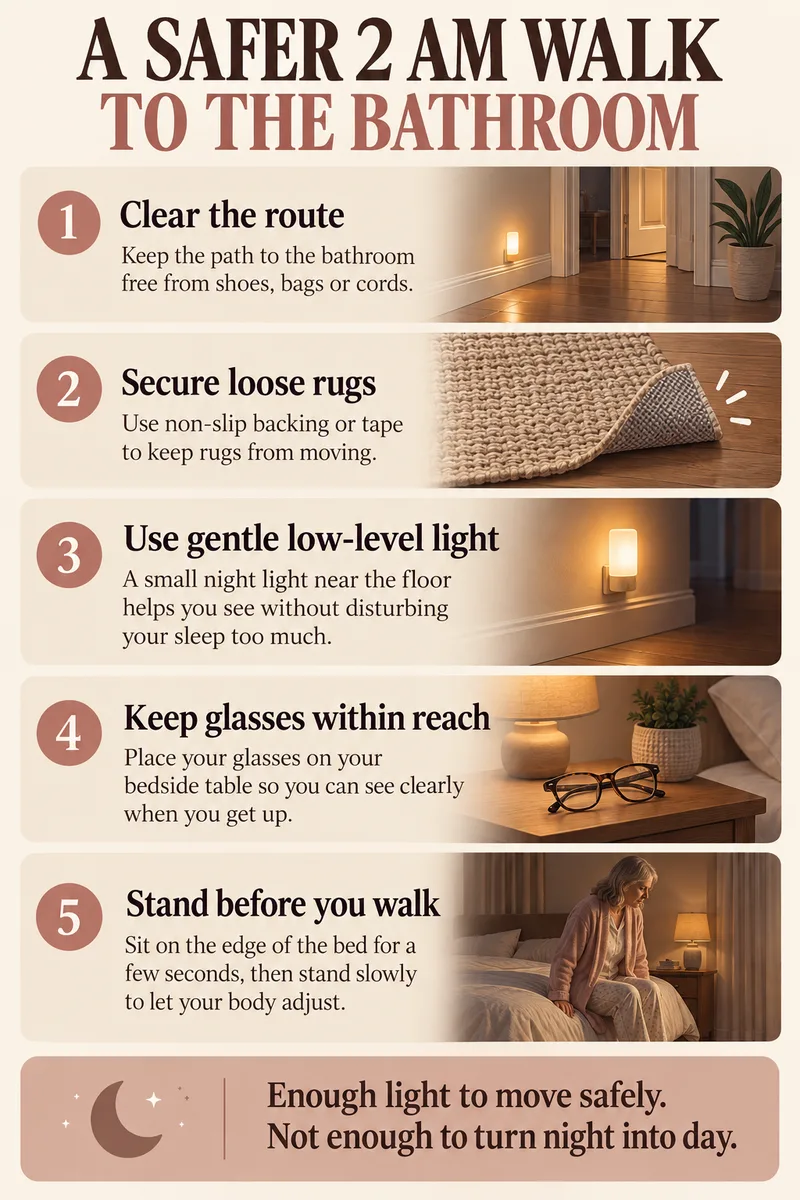
There is a part of nocturia that gets less attention. You have to get there.
At 2 a.m. you are sleepy, your eyes have not adjusted and you may be stiff when you first stand. If you take a medicine that causes dizziness, or your balance is not what it was, that walk deserves thought.
A meta-analysis of nine studies found that nocturia is probably associated with about a 1.2-fold higher risk of falls and possibly a 1.3-fold higher risk of fractures. The authors rated the evidence that nocturia causes them as very low, so this is an association, not proof. It is still a reason to make the route safe.
- Clear the route. Shoes, bags and electrical cords all cause trips. Loose rugs deserve special attention.
- Use low, steady light. Enough to see where you are going, not so much that the middle of the night turns into daytime.
- Keep your glasses within reach if you need them to walk safely.
- Sit for a moment before you stand if you tend to feel light-headed.
The goal is enough light to move safely, without switching your brain to morning.
How to get back to sleep after a bathroom trip
Once you are back in bed, try not to give your brain extra reasons to stay up.
Keep the bathroom light as low as is safe. Leave your phone alone. And if checking the time sends you counting down the hours, some people find it easier to leave the clock unchecked. Seeing 3:17 a.m. can turn a short waking into arithmetic about how much sleep is left.
Let the trip stay what it was: a brief interruption.
If you are often wide awake after you return, that is a clue in itself. The bladder may be only one part of the night's problem, and our quality sleep guide covers the wider picture.
Common questions about frequent urination at night
- How many times is it normal to pee at night?
- The Urology Care Foundation says getting up two or more times a night is not normal and is a clear sign of nocturia. Cleveland Clinic suggests seeing a provider if you wake more than once or twice and it bothers you. How much it disrupts your sleep matters as much as the count.
- Is frequent urination at night a sign of diabetes?
- It can be one sign, but it is not proof. Needing to urinate more often and feeling very thirsty are common diabetes symptoms. Many other things cause nighttime trips, from evening drinks to medicines. If you also feel very thirsty or pass large amounts of urine, ask for a check.
- Does drinking water before bed make you pee at night?
- It can. Cleveland Clinic lists too many fluids before bed as a cause and suggests cutting back on fluids before bed. That is different from drinking less overall. Moving most of your fluids earlier in the day is the usual idea.
- Why do I wake up to pee every night at the same time?
- A steady time often points to a pattern rather than chance: a late drink, a medicine, or a sleep cycle where you surface lightly. It can also mean you were awake first. A week of notes shows whether the urge or the waking comes first, which is useful to a doctor.
- Can sleep apnea cause frequent urination at night?
- It can be linked. The NHLBI lists waking up often during the night to urinate as a sleep apnea symptom, alongside breathing that starts and stops and daytime sleepiness. If you also snore loudly or wake gasping, mention it. Treating apnea is a different job from treating the bladder.
Start with a week of notes
Frequent urination at night is common, and it is not something you have to put up with in silence. Sometimes a change to evening habits helps. Sometimes the cause is the bladder, the prostate, a medicine, or how much urine your body makes overnight. And sometimes you find you were waking first.
That difference is worth finding. The goal is not only fewer bathroom trips. It is protecting as much unbroken sleep as you can.
Start with a week of notes, then take them to your doctor or pharmacist. If you want somewhere to keep the log and a plan for the rest of your nights, Sleep Like a High-Performer is an interactive app plus a printable workbook, US$27 one time. Use it alongside appropriate care, not instead of it.