
Snoring vs Sleep Apnea: What Is the Difference and Does It Matter?
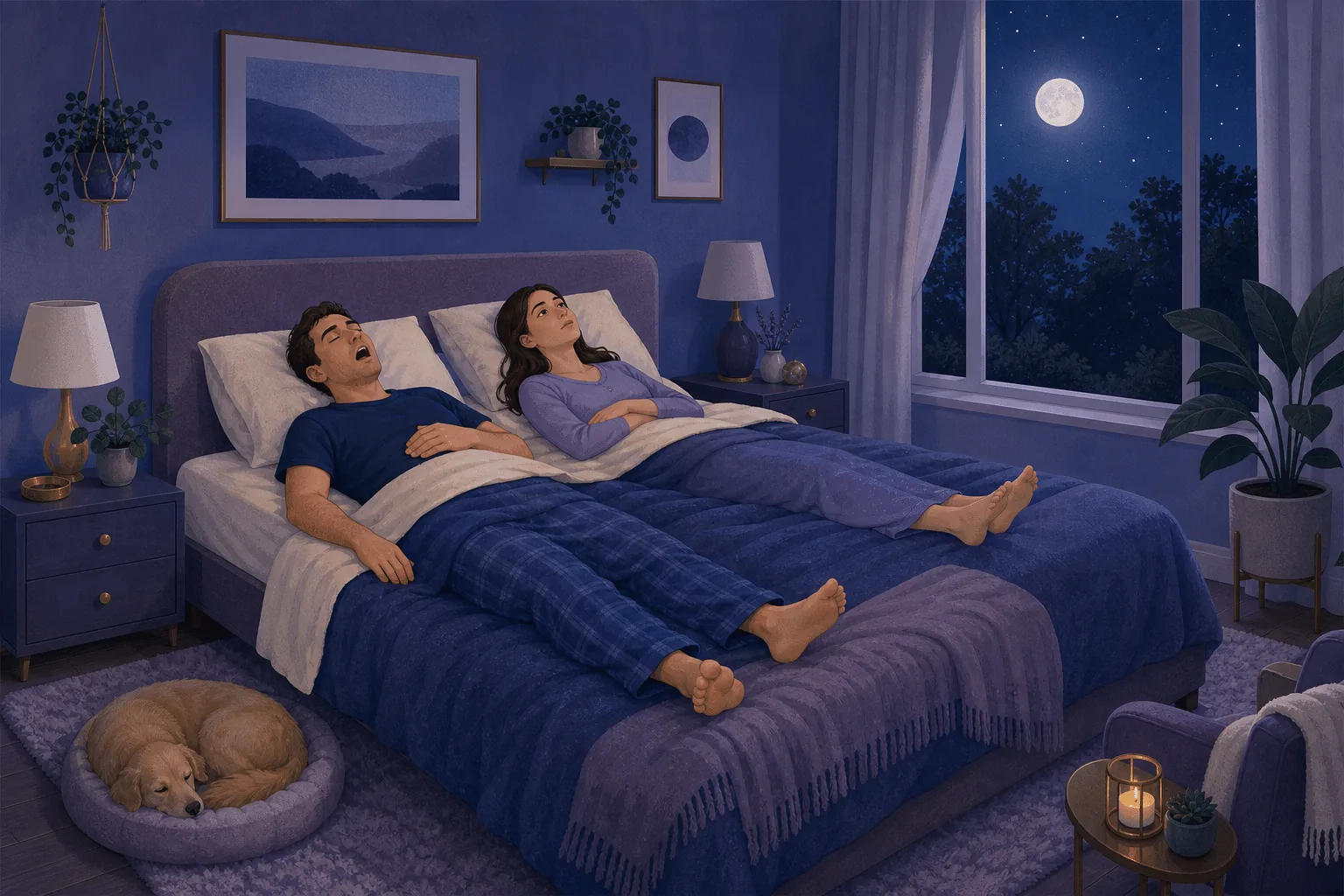
Your partner elbows you awake again, or you wake yourself with a snort loud enough to startle you. Now you're up at 2am searching snoring vs sleep apnea, wondering if the noise you make at night is harmless or a warning. The honest answer: most snoring isn't dangerous, but sleep apnea is worth taking seriously. Knowing the difference between snoring and sleep apnea can protect more than your partner's patience.
Snoring vs Sleep Apnea: What Is Actually Happening?
Both sound similar from the next pillow over, but only one of them stops your breathing. Snoring happens when the soft tissue at the back of your throat relaxes and vibrates as air passes through. It's also very common: more than a quarter of adults snore regularly, according to the Sleep Foundation. It tends to get worse when you sleep on your back, drink alcohol in the evening, or go to bed overtired.
Sleep apnea is different. The airway doesn't just narrow. It collapses or gets blocked, and breathing actually stops for a moment. Your brain senses the problem and jolts you just awake enough to breathe again; the Cleveland Clinic notes that in severe cases this happens 30 or more times every hour.
You rarely remember those wake-ups. That's why so many people with sleep apnea insist they slept fine.
So is snoring sleep apnea? Here's the snoring vs sleep apnea picture at a glance:
| Snoring | Sleep Apnea | |
|---|---|---|
| Breathing | Continues all night | Stops and restarts repeatedly |
| Sound | Steady rasping or rumbling | Loud snoring broken by silent pauses, then gasps |
| Sleep quality | Usually normal | Fragmented, even after eight hours in bed |
| Daytime effect | Little to none | Exhaustion, brain fog, morning headaches |
| Health risk | Low on its own | Associated with high blood pressure, heart problems, and type 2 diabetes |
| Next step | Lifestyle changes | Talk to your doctor |
Does Snoring Mean Sleep Apnea?
Not necessarily, and this is where most of the late-night worry comes from. Snoring is one of the most common symptoms of obstructive sleep apnea, but plenty of snorers never develop apnea. So is snoring sleep apnea? On its own, no.
The American Academy of Sleep Medicine estimates that nearly 30 million American adults have obstructive sleep apnea, and about 80 percent have never been diagnosed.
The difference between snoring and sleep apnea comes down to what your breathing does. If air keeps flowing all night, it's snoring. If breathing stops, restarts with a gasp, and leaves you wrecked the next day, that pattern points toward apnea. Apnea also comes in two forms, which we explain in The 2 types of sleep apnea.
For plain snoring, small changes may help: sleeping on your side, skipping evening alcohol, and keeping a healthy weight. You'll find more ideas in How to stop snoring: 5 natural remedies.
Warning Signs That Point to Sleep Apnea
You can't watch yourself sleep, but your body leaves clues. Does snoring mean sleep apnea in your case? Talk to your doctor if several of these sound familiar:
- Waking with a gasp or a choking feeling
- A partner says you stop breathing at night
- Heavy daytime tiredness after a full night in bed
- Morning headaches
- Trouble concentrating or remembering things
Not everyone with sleep apnea snores, either. The National Heart, Lung, and Blood Institute notes that "some women with sleep apnea do not snore," and its symptom list marks loud snoring as more common in men, with fatigue, headache and insomnia more common in women.
If a smartwatch is what sent you here, treat its wake count as a reason to ask, not a result. The American Academy of Sleep Medicine says consumer sleep trackers "cannot be utilized for the diagnosis and/or treatment of sleep disorders at this time."
This isn't a wait-and-see situation. The National Heart, Lung, and Blood Institute warns that untreated sleep apnea raises the risk of stroke and heart attack, and it's also associated with high blood pressure and type 2 diabetes. The good news: it's very treatable. A sleep study, in a clinic or at home, shows what your breathing and oxygen levels do overnight, and CPAP therapy or a dental device can change how you feel during the day.
FAQ
Does snoring run in families?
Often, yes. You can inherit a narrow airway, a recessed jaw, or other traits that make snoring more likely. If loud snoring and daytime exhaustion both run in your family, mention it to your doctor.
I hear myself snoring and wake up. Is that sleep apnea?
It can be. Waking yourself with a snort or gasp is a classic sign that your airway briefly closed. Once in a while, after a late night or a few drinks, it's probably nothing. If it happens regularly and you drag through your days, get checked.
How do I know if I have sleep apnea?
You can't confirm it on your own. Run through the warning signs above, ask a partner what they hear, or record yourself with a phone app. A sleep study is the only way to know for sure, and your doctor can arrange one.
Whichever side of the question you land on, better sleep habits help. The free Health Bandit Sleep Report covers natural strategies many readers find a practical starting point.
Also on this site: Lack of sleep and its health consequences