
Perimenopause Insomnia: Why You Keep Waking and What Helps
Why sleep breaks in perimenopause, and what to ask for when it does.
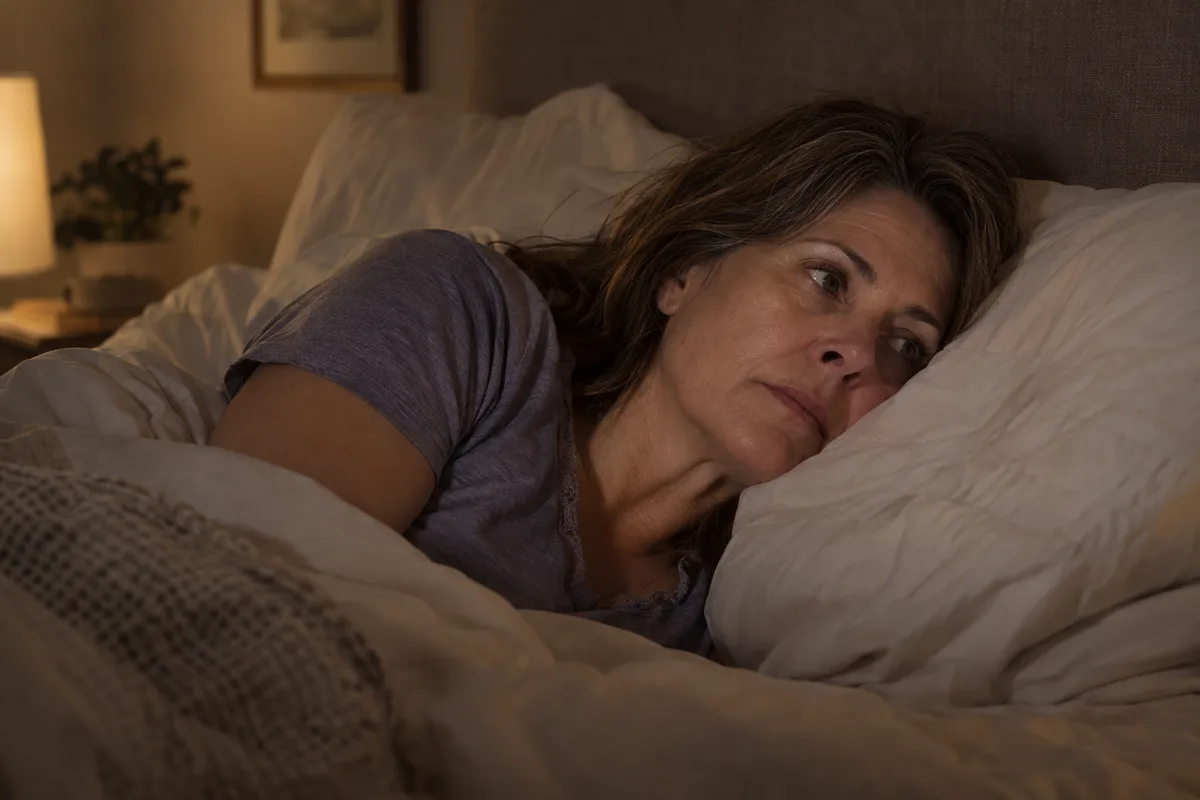
Perimenopause insomnia can look like this. You fall asleep without much trouble. Then you wake, drift off, wake again, and reach the point where you know tomorrow will be hard before tomorrow has even started.
Sometimes you are hot. Sometimes you are perfectly comfortable, but your mind has decided the middle of the night is a good time to review everything you have ever worried about.
You do not have to spend hours trying to fall asleep for your sleep to be a problem. Losing long stretches of the night after falling asleep matters too.
Knowing hormones may be involved offers some reassurance. It does not tell you what to do tonight, or why the cooling bedding helped your night sweats but you are still awake.
That is where it helps to separate what disturbs your sleep from what keeps you awake afterward. You may need help with one, the other, or both.
Can menopause cause insomnia?
Yes. Sleep difficulties can begin during perimenopause, the transition leading up to menopause, and may continue afterward. Hormonal changes, night sweats and mood changes can all contribute. But a new sleep problem should not automatically be put down to hormones, especially if there are signs of another condition.
Perimenopause is the transition before menopause. You can still be having periods when sleep starts changing.
NICE's menopause guideline says menopause can be diagnosed once someone has gone at least 12 months without a period and is not using hormonal contraception.
Insomnia is broader than being unable to drop off. It can mean trouble falling asleep, trouble staying asleep, or both, and it matters when it affects your days. Briefly surfacing and returning to sleep is different from spending much of the night awake and struggling through the next day.
You do not have to compare your nights with someone else's worse nights before taking yours seriously.
Falling asleep fine but waking all night? Start with your sleep pattern
"I am not sleeping" is a useful starting point. A little more detail makes it easier to work out what kind of help you need.
| What your night looks like | What is worth noticing |
|---|---|
| You take a long time to fall asleep | Are you sleepy at bedtime, or exhausted but alert? Is worry or discomfort keeping you up? |
| You fall asleep readily, then struggle to return to sleep | Do you notice sweating, pain, a bathroom need or racing thoughts when you wake? |
| You wake repeatedly and never feel refreshed | Has anyone noticed snoring, gasping or pauses in your breathing? |
| You wake much earlier than you want | When did you actually fall asleep, how much sleep did you get, and how do you feel afterward? |
These are clues, not diagnoses. You can have more than one pattern.
For example, falling asleep at 8 p.m. and waking at 3 a.m. gives you a different starting point from falling asleep at midnight and waking at 3 a.m. The clock time alone does not tell the whole story.
Nor does falling asleep quickly rule out insomnia. If getting back to sleep is the part that has become difficult, say that specifically when you ask for help.
Our guide to why you keep waking at 3 a.m. covers the broader reasons for night waking. Here, the focus is what changes during perimenopause and how to respond when sleep stops being dependable.
Why does perimenopause cause insomnia?
Perimenopause can disturb sleep through several overlapping routes. Hormone fluctuations can affect temperature regulation and sleep itself. Night sweats and anxiety can interrupt sleep or make it harder to settle. Once nights become difficult, worry about sleep can add another layer.
Hormone fluctuations and night sweats
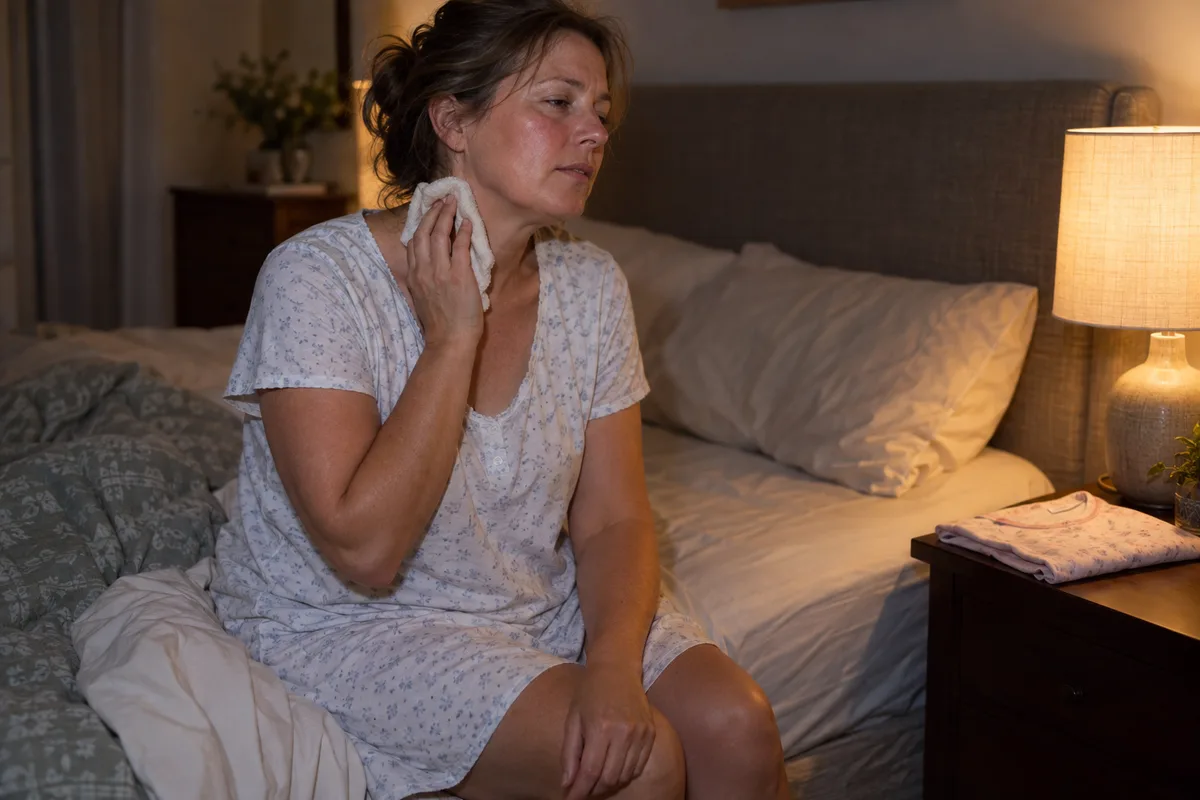
Estrogen and progesterone fluctuate and decline during the menopausal transition. Stanford's Sleep Health and Insomnia Program explains that falling estrogen makes temperature control less stable, which can cause hot flashes and night sweats.
It also notes that progesterone has sleep-promoting effects, so its decline may contribute to lighter sleep and more nighttime awakenings.
If you wake uncomfortable and need to change your clothes, a cooler room may make the night easier to manage. But it does not necessarily address what keeps bringing you out of sleep.
There is a useful distinction between making a sweaty night less miserable and getting treatment for repeated, disruptive night sweats. You are allowed to want both.
The hot flash ends, but your mind stays awake
The physical disturbance may pass quickly. Your mind may not settle so readily.
You start calculating how much sleep is left. Then you think about the drive, the workday, or the children who will be awake at six. By then, the sweating has stopped, but you are fully alert.
Stanford describes a two-way link between sleep and mood in this transition. Anxiety can make it harder to fall or stay asleep, and poor sleep can make emotional strain harder to manage. It also says that worry about lost sleep can itself keep you from falling back asleep.
This does not mean the original problem was "all in your head." It means there may now be more than one thing worth treating.
What if you are not having hot flashes?
Tell your clinician that too. "I wake several times, but I am not hot or sweating" is useful information.
When someone reports sleep trouble, NHLBI says a provider may ask about new or long-standing health problems, medicines, snoring or gasping, caffeine and alcohol, and whether you are going through menopause.
You do not need to arrive with the explanation already worked out. Describe what happens and how it affects you. That gives the appointment somewhere concrete to begin.
What can you do when you wake during the night?

Make the immediate situation easier before trying to solve your entire sleep problem.
If sweating is a regular issue, prepare while you are awake: dry sleepwear within reach, bedding you can adjust easily, and a clear route to the bathroom. The aim is less disruption when you are tired and uncomfortable.
If you are awake and becoming frustrated, try this:
- Keep the light low. Give yourself enough light to move safely without turning the room into daytime.
- Leave the calculations alone. Some people find that turning the clock away helps when checking it sends them counting down the hours.
- Take a quiet break if lying there is making you more alert. Read something undemanding in a comfortable place, then return to bed when sleepy.
- Adapt this to your body. If getting up is unsafe because of dizziness, pain or mobility problems, do not force it. Ask for an approach that fits your circumstances.
Getting out of bed when you cannot sleep is part of what NHLBI calls stimulus control therapy. The idea is to link your bed with being asleep rather than lying there awake.
The practical question is whether staying where you are is helping you settle or making you increasingly tense.
What actually helps perimenopause insomnia?
The most useful plan depends on what is happening in your nights. A cooling product, treatment for hot flashes and treatment for insomnia serve different purposes.
When night sweats are the main disruption
If sweating repeatedly wakes you or leaves you changing clothes and bedding, bring that specific problem to a menopause appointment.
The Menopause Society's 2023 position statement concludes that hormone therapy remains the most effective treatment for hot flashes and night sweats. For someone whose sleep is being interrupted by these symptoms, reducing them may help the night as well.
That does not make hormone therapy an automatic answer to insomnia. Suitability depends on your medical history and individual risks. The same statement lists estrogen-dependent cancers and cardiovascular disease as reasons it may not be suitable. If either applies to you, involve your treating team.
There are also nonhormonal options. The statement recommends cognitive behavioral therapy, certain antidepressants (SSRIs and SNRIs) and gabapentin, among others, for hot flashes. These are prescription conversations, not suggestions to borrow a medicine or choose one from a list.
A useful way to ask is: "Night sweats are repeatedly interrupting my sleep. Which hormonal or nonhormonal options fit my medical history?"
Make sure the conversation includes side effects, interactions, monitoring and when to review whether the treatment is helping.
Night sweats stopped, but you still cannot sleep
If the sweating improves but the long wakeful stretches remain, that remaining problem deserves attention in its own right.
Cognitive behavioral therapy for insomnia, usually shortened to CBT-I, is a structured treatment for persistent insomnia. NHLBI describes it as a 6- to 8-week plan, usually recommended as the first treatment for long-term insomnia.
Stanford calls CBT-I its frontline treatment for insomnia and says it has been helpful in the context of perimenopausal symptoms.
The American Academy of Sleep Medicine recommends multicomponent CBT-I for chronic insomnia. Its guideline also suggests against using sleep hygiene alone as treatment. Being handed another list about coffee and screens is not the same as receiving CBT-I.
CBT-I includes parts such as sleep restriction therapy, which limits the time you spend in bed. That is why the advice needs to fit your health and daily responsibilities. Do not improvise a sleep-restriction schedule from an internet example.
Ask: "Can you refer me to someone who provides CBT-I? If access is difficult, is there a validated digital program appropriate for me?"
NHLBI says CBT-I can be done in person, by telephone or online. A general relaxation app is not necessarily the same thing.
There is also menopause-specific CBT. NICE says to consider it for sleep problems such as night-time awakening that come with hot flashes and night sweats. Ask which approach a service offers and whether it addresses persistent insomnia as well as menopausal symptoms.
When another sleep problem needs attention
Repeated waking can have contributors beyond perimenopause.
Stanford notes that falling estrogen and progesterone can weaken throat muscles, raising the risk of obstructive sleep apnea. Insomnia and sleep apnea are different disorders with different treatments, and having both is common.
NHLBI lists gasping for air, daytime tiredness and waking often to urinate among sleep apnea symptoms, and says insomnia and fatigue are more common in women with it. If that sounds familiar, mention it rather than assuming the answer must be hormones.
Our guide to snoring versus sleep apnea explains the distinction. A clinician can decide whether a sleep study is appropriate.
Likewise, describe pain or an uncomfortable urge to move your legs, rather than simply saying you feel restless. Our article on restless legs and sleep explains what to look for.
Include any new medication or supplement and when you take it. Do not change prescribed doses or timing on your own.
Where daily habits fit
The basics still have a place. They are support, not a test of how disciplined you are.
NHLBI recommends keeping the same sleep and wake times every day, sleeping in a cool, quiet, dark bedroom, and avoiding caffeine and alcohol close to bedtime. It adds that alcohol can make it easier to fall asleep but leads to lighter sleep, so you are more likely to wake during the night.
Choose one manageable change. If wine is part of your evening, try evenings without it and record what happens. If your bedroom is uncomfortable, address that before buying another supplement. Our quality sleep guide covers the wider picture.
After a poor night, keep the plan realistic. A complicated morning routine is unlikely to survive exhaustion. And if you are dangerously sleepy, safety comes before sticking perfectly to a schedule.
What should you record before asking for help?
A short record can make the appointment more useful. NHLBI suggests keeping a sleep diary for 1 to 2 weeks before seeing your doctor, but you do not need to delay care while collecting it.
Write a few notes in the morning:
- Roughly when you went to bed, fell asleep and got up.
- Whether there were long stretches awake or many brief awakenings.
- What you noticed: sweating, pain, a bathroom need, worry or nothing obvious.
- Relevant menstrual changes, medicines, caffeine and alcohol.
- How you felt and functioned the following day.
Approximate is fine. The goal is to explain the pattern, not prove exactly how many minutes you slept. Our sleep diary guide can help you get started.
Bring three questions with your notes:
- Could this be insomnia, another sleep disorder, or both?
- What treatment matches the symptoms I am actually having?
- When should we review progress, and what will we try if this does not help?
That last question matters. You should leave knowing what happens next if the first step is not enough.
When should you seek help rather than keep experimenting?
Book an appointment when poor sleep is affecting your ability to cope, concentrate or function, or when the pattern persists or worsens. NHLBI says to talk to your doctor if not getting enough sleep affects your daily activities.
Insomnia is considered chronic when it happens 3 or more nights a week and lasts 3 months or longer. That is a diagnostic threshold, not a requirement to endure three months before asking for help.
Seek assessment for gasping, witnessed breathing pauses or significant daytime sleepiness. If you are struggling to stay awake while driving, stop driving and arrange a safer way to travel.
Be specific about the impact. "I am making mistakes at work and feel too sleepy to drive safely" communicates something that "my sleep is a bit poor" may not.
This article provides general information, not an individual diagnosis or treatment plan. If you take medicines, have a medical condition, or are considering hormone therapy, a sleep aid or a supplement, talk to your healthcare professional first.
Common questions about perimenopause insomnia
- Can insomnia continue after menopause?
- Yes. Your final period is not a deadline by which sleep must improve. Continuing symptoms deserve the same attention to insomnia, menopausal symptoms and other possible contributors, such as sleep apnea. Do not assume nothing can be done because you are now postmenopausal. Describe your nights to a clinician and ask what fits.
- How long does perimenopause insomnia last?
- No reliable source gives a personal timetable, and the length of the menopausal transition does not tell you how long your insomnia will last. Insomnia is called chronic when it lasts 3 months or longer. Rather than waiting for a particular birthday or stage, seek help according to how often sleep is disrupted and what it does to your days.
- Does melatonin help you stay asleep?
- Not reliably. NCCIH says practice guidelines from the American Academy of Sleep Medicine and the American College of Physicians found not enough strong evidence on the effectiveness or safety of melatonin for chronic insomnia to recommend it. Talk to your doctor before adding it, especially if you take other medicines. Ask whether it fits your actual sleep problem.
- Will hormone therapy fix insomnia?
- It may help when hot flashes and night sweats are disrupting sleep, but it cannot be promised to resolve every sleep problem. Persistent insomnia or a coexisting condition may need its own treatment, such as CBT-I. Whether hormone therapy suits you depends on your medical history, so it is a conversation for your doctor.
- When is poor sleep in perimenopause worth a doctor's visit?
- When it affects your days: concentration, mood, mistakes at work, or feeling too sleepy to drive safely. Also when it keeps happening, gets worse, or comes with gasping, witnessed breathing pauses or heavy daytime sleepiness. You do not have to wait three months. A one- or two-week sleep diary gives the appointment something concrete.
Choose the next step that matches your nights
You do not need to rebuild your entire life around sleep this week.
If sweating is the main disturbance, prepare for a more comfortable night and ask about symptom treatment. If you spend long stretches awake even when comfortable, ask specifically about CBT-I. If breathing symptoms or severe sleepiness are part of the picture, make assessment the priority.
For help organizing your habits and observations, Sleep Like a High-Performer is an interactive app plus a printable workbook, US$27 one time. Use it alongside appropriate care, as somewhere to keep your plan and notice what changes.
The aim is to make your next step clearer, so another difficult night does not leave you starting from scratch.