
The 2 Types of Sleep Apnea: How They Differ and How They Are Treated
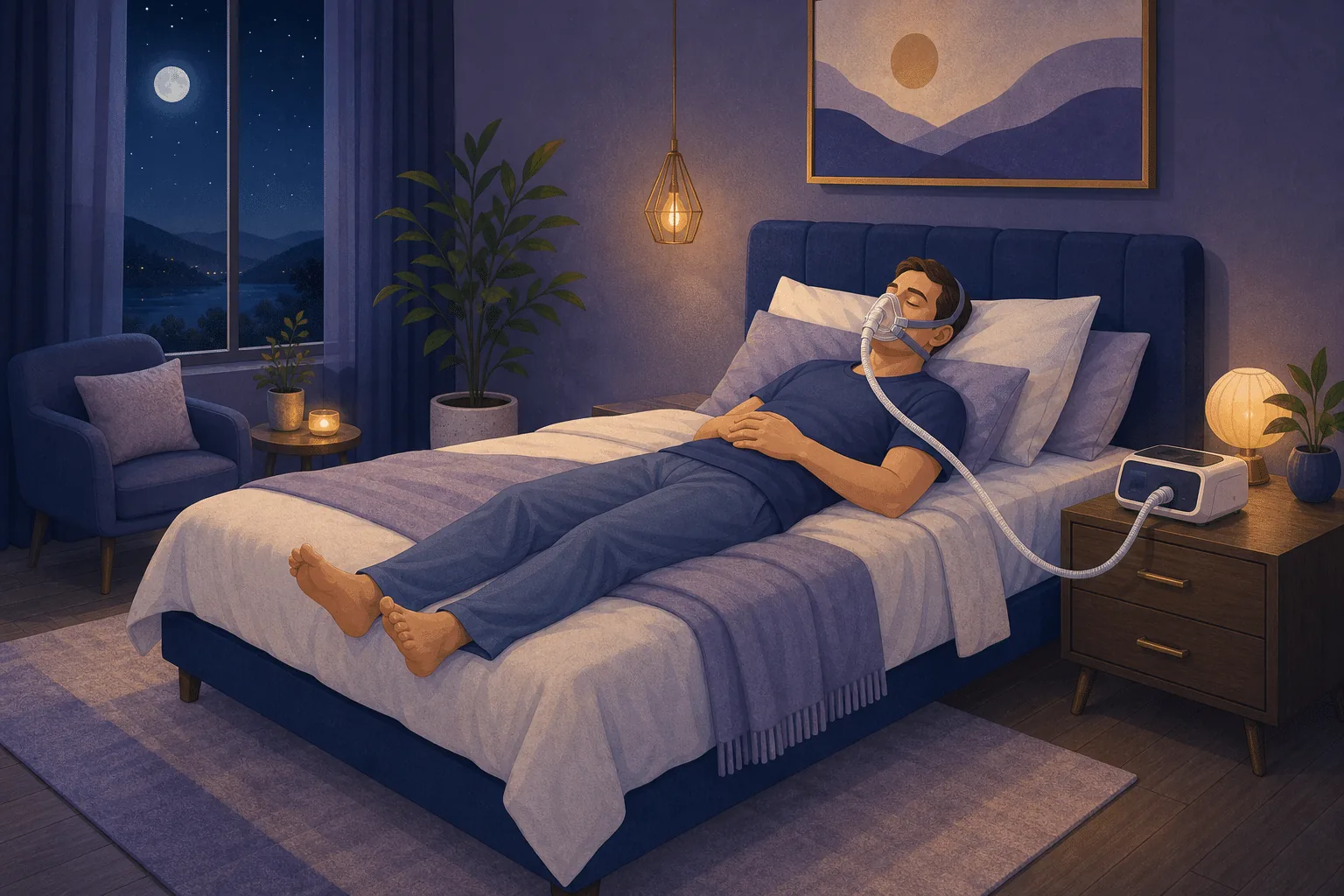
If your partner has told you that you stop breathing at night, or a doctor has mentioned sleep apnea, the first thing to know is that it is not a single condition. There are two types of sleep apnea, and they have very different causes. One is a plumbing problem. The other is a wiring problem.
Knowing which one you are dealing with matters, because the treatment that works well for one does not always work for the other.
Obstructive Sleep Apnea, Explained
Obstructive sleep apnea, or OSA, is by far the more common form. The American Academy of Sleep Medicine estimates that nearly 30 million American adults have OSA, and about 80 percent of those cases have never been diagnosed. The cause is mechanical. During sleep, the soft tissue at the back of your throat relaxes and collapses, blocking the airway either partly or completely.
Your brain still tells your body to breathe. Your lungs still try. But air cannot get past the blockage, which is why people with OSA often gasp, choke, or snore loudly through the night.
Several things raise your risk of obstructive sleep apnea:
- Extra weight, especially around the neck
- A naturally narrow airway
- Sleeping on your back
- Alcohol in the evening, which relaxes throat muscles further
- Menopause, which reduces hormonal support for airway muscle tone
- Getting older
Typical signs include loud snoring, breathing pauses someone else notices, waking with a dry mouth or headache, and heavy daytime sleepiness even after a full night in bed.
Central Sleep Apnea, Explained
Central sleep apnea, or CSA, is far rarer. The Sleep Foundation puts it at about 0.9 percent of American adults over 40, fewer than 1 in 100. With this type of sleep apnea, the airway stays open. The problem is the signal: the brain periodically fails to tell the breathing muscles to do their job.
In plain terms, your body knows how to breathe. The instruction just does not arrive on time during sleep.
Central sleep apnea usually shows up alongside something else:
- Heart failure and atrial fibrillation
- Stroke
- Opioid pain medications, methadone most often, which can suppress the drive to breathe
- Time at high altitude, typically above 8,000 feet
- Brainstem injury
Snoring is often quieter or absent with CSA, which makes it easier to miss. Daytime fatigue, frequent waking, and witnessed pauses in breathing still show up.
The Two Types of Sleep Apnea Compared
The central sleep apnea vs obstructive sleep apnea question comes down to where things go wrong. One blocks the airway. The other interrupts the command to breathe.
| Obstructive sleep apnea | Central sleep apnea | |
|---|---|---|
| Cause | Throat tissue blocks the airway | Brain fails to signal the breathing muscles |
| How common | Nearly 30 million US adults | About 0.9 percent of adults over 40 |
| Snoring | Loud and frequent | Often quiet or absent |
| Common links | Weight, alcohol, back sleeping, menopause | Heart failure, stroke, opioids, altitude |
| First-line treatment | CPAP | ASV or CPAP, plus treating the underlying condition |
How Each Type Is Diagnosed and Treated
Both types of sleep apnea are diagnosed with a sleep study, done either at home with a portable monitor or overnight in a clinic. The overnight version is called polysomnography. It records your breathing, oxygen levels, brain waves, and heart rate, and it settles the central sleep apnea vs obstructive sleep apnea question for a sleep specialist, along with how severe your case is. Cleveland Clinic notes that a home test cannot reliably diagnose central sleep apnea, so suspected CSA is usually confirmed in a lab.
For moderate to severe OSA, the standard treatment is CPAP, short for continuous positive airway pressure. A CPAP machine sends a steady stream of air through a mask worn during sleep, and that gentle pressure holds the airway open. The first few weeks take some adjusting, and mask fit matters a great deal. Many people describe the change in their energy as dramatic once they settle in.
For milder cases, a sleep specialist may suggest a custom oral device that repositions the jaw, positional therapy to keep you off your back, or weight loss, which sometimes resolves the problem entirely.
CSA is treated differently because the airway is not the issue. Positive airway pressure is still used, but often as BiPAP or a device called ASV, adaptive servo-ventilation, which monitors your breathing in real time and fills in the gaps when the brain's signal drops out. Because CSA rides along with another illness, treating the underlying condition, such as heart failure, is usually part of the plan as well.
One thing to be clear about: no supplement, pillow, or home remedy treats sleep apnea. It is a medical condition that needs medical care.
When to Get Tested
Talk to your doctor if any of this sounds familiar: loud snoring, someone has watched you stop breathing, you wake up gasping, or you feel exhausted after what should be enough sleep. Neither of the two types of sleep apnea improves on its own. The long-term effects of untreated apnea on heart health and memory are well documented.
Your doctor can refer you for a sleep study and help pin down which type you are dealing with. That single test changes everything about what happens next.
FAQ
Can you have both types of sleep apnea?
Yes. Some people have mixed sleep apnea, sometimes called complex sleep apnea, where obstructive and central events happen in the same night. It can also surface when someone with OSA starts CPAP and central pauses appear. A sleep specialist can adjust the treatment when that happens.
Can central sleep apnea happen while awake?
The pauses themselves happen during sleep. In severe cases linked to heart failure or opioid use, irregular breathing patterns can sometimes appear during drowsy, relaxed wakefulness too. If you ever notice pauses in your breathing while awake, tell your doctor promptly.
Also on this site: Snoring vs sleep apnea: what is the difference | How to stop snoring: 5 natural remedies | Lack of sleep and its health consequences
External resource: Sleep Foundation: Sleep Apnea, an in-depth guide to both types of sleep apnea, risk factors, and treatment options
If you are exploring natural ways to support better sleep alongside medical treatment, not instead of it, the Health Bandit guide is worth a look. You can also download the free Health Bandit starter guide here.