
Red Light Therapy vs Heating Pad
What each one actually does for joint pain, and which fits your symptoms and budget.
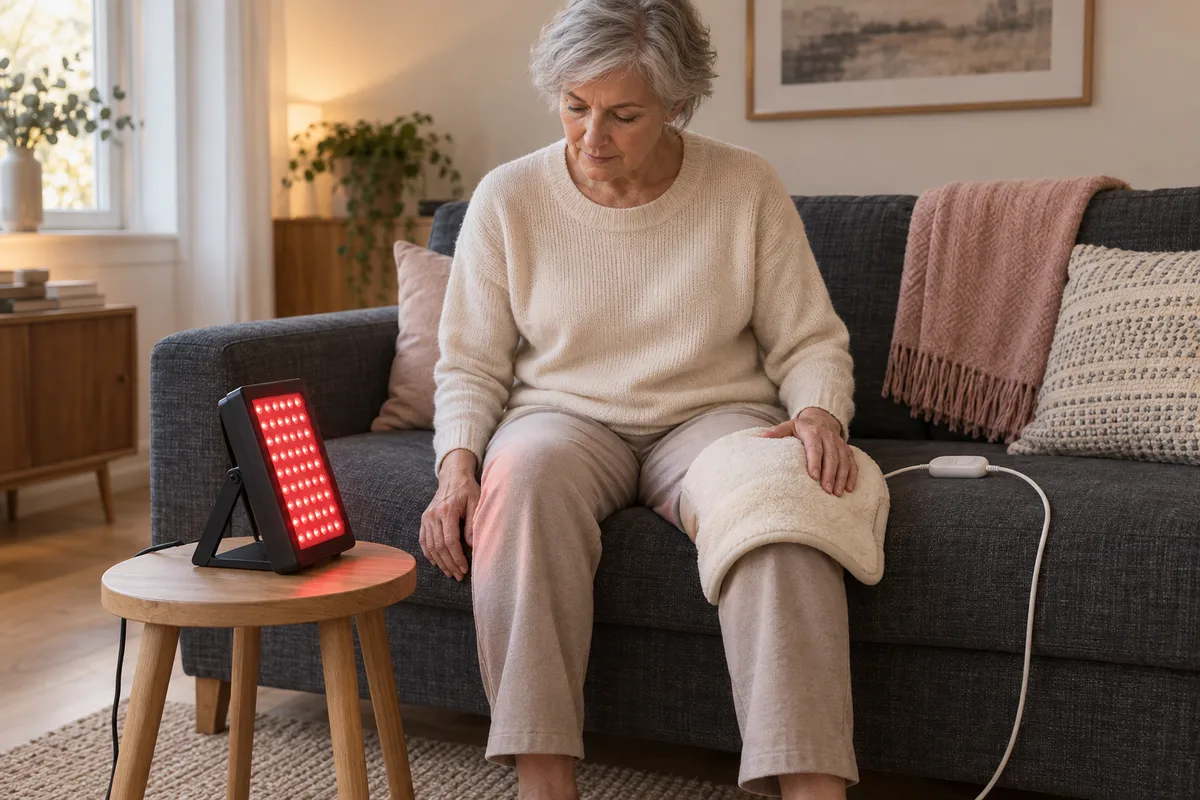
Your knee aches after a long afternoon on your feet. Your hands feel stiff when you first get up. A heating pad sounds comforting, but you keep seeing red light devices advertised for the same problems.
Does the more expensive option offer something you actually need?
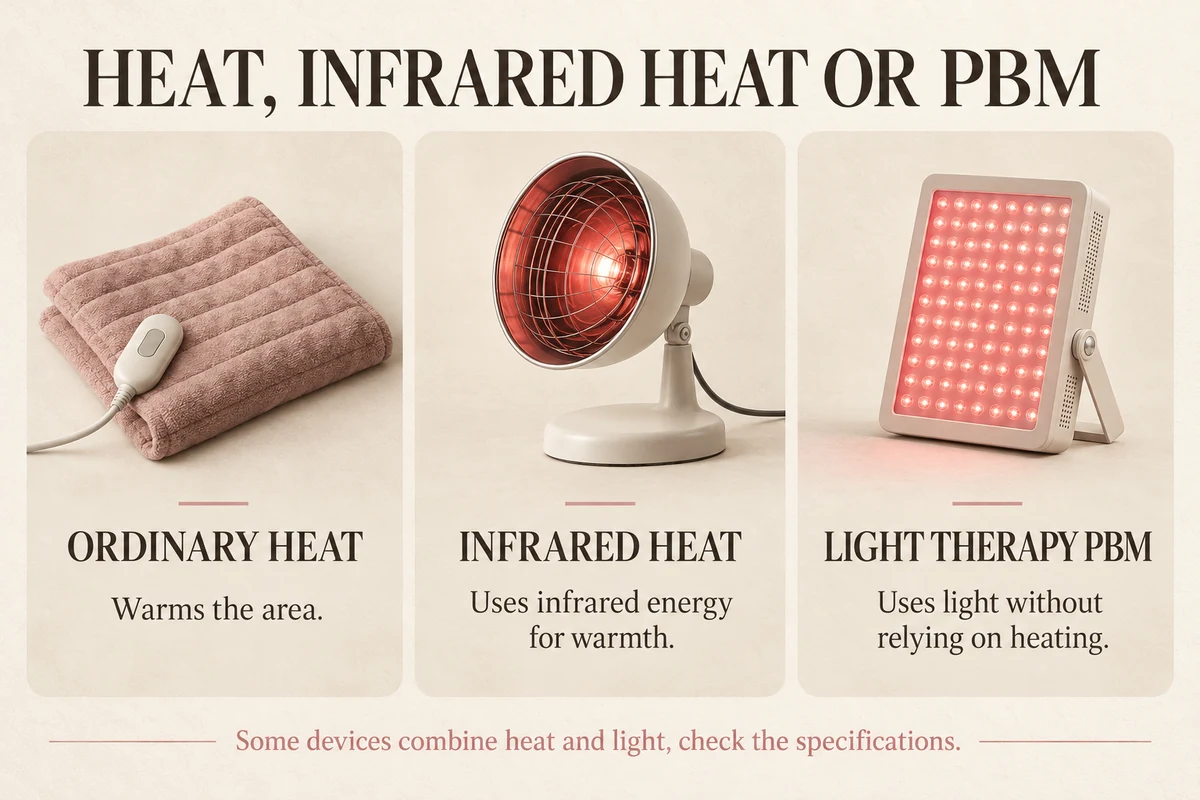
When comparing red light therapy vs heating pad options, start with what each treatment does. A heating pad provides warmth that may ease stiffness and surrounding muscle tension. Red and near-infrared light therapy aims to produce a response to light in tissue. Infrared heat belongs in the comparison too, but the word "infrared" does not make all these devices equivalent.
The evidence reviewed here does not establish that a home red light device works better than an ordinary heating pad for joint pain. That leaves a useful question: which option, if either, fits your symptoms, budget and existing care?
Red light therapy vs heating pad: the quick comparison
| Question | Ordinary heating pad | Infrared heat device | Red or near-infrared light therapy |
|---|---|---|---|
| What is its main purpose? | To warm the area. | To provide heat using infrared energy, sometimes alongside contact heating. | To deliver light for photobiomodulation, often shortened to PBM. |
| What might you notice during use? | Warmth and temporary comfort. | Warmth, depending on the device and setting. | Light, with little or some warmth depending on the device. |
| What is the evidence discussed below? | Arthritis guidance supports heat as an option for symptom relief, with limitations. | Studies involve very different devices and conditions. | Some knee osteoarthritis findings are encouraging, but certainty and applicability vary. |
| What practical setup matters? | A suitable pad, accessible controls and safe positioning. | The exact type of heater, temperature controls and positioning instructions. | Treatment area, light output, distance, session instructions and eye protection where required. |
| What should you avoid assuming? | Feeling better means the joint has healed. | "Infrared" means a superior treatment or the same thing as PBM. | Any red panel reproduces the results of a clinical study. |
The research behind these distinctions is explained below. Devices that combine light and a separate heating function need both sets of instructions.
What ordinary heat can do for stiff joints
Warmth can be useful when a familiar joint problem comes with stiffness or achy muscles. Think of hands that feel reluctant to open in the morning, or tight muscles around a sore knee.
The Arthritis Foundation explains that heat can loosen stiff joints and soothe aching muscles. Warming an area increases local blood flow and may make movement feel more comfortable.
The goal is practical: does a safe period of warmth make your usual gentle movement easier? You do not need a complicated device to ask that question. A warm shower or an appropriate warm compress may already be available at home.
There are limits to the evidence. The American College of Rheumatology and Arthritis Foundation guideline conditionally recommends local heat or cold for hand, hip and knee osteoarthritis. The recommendation is conditional because the studies used varied treatments and the benefits were generally short-lived.
That is support for an option, rather than a guarantee. It also does not establish that one particular heating pad is better than another.
If your symptoms seem to change with the season, our guide to cold weather and arthritis explores that wider picture.
When warmth is the wrong next step
A newly hot, swollen joint is different from familiar stiffness. The Arthritis Foundation advises avoiding heat with acute injury or an inflammatory flare, particularly sudden swelling and redness.
Do not treat a new symptom pattern as a shopping problem. It may need assessment before you choose any device.
Infrared heat and near-infrared light are different uses of energy
"Infrared" describes a region of the light spectrum. It does not tell you, by itself, how a treatment is intended to work.
An infrared heat lamp or heated mat is designed to warm you. A near-infrared PBM device uses a specified light exposure to seek biological effects without relying on substantial tissue heating. Some light devices still become warm, and some deliberately add a heater.
Far-infrared heating products also use different wavelengths from the near-infrared LEDs commonly found in PBM panels. A far-infrared heating pad should not borrow the evidence for a near-infrared clinical light treatment simply because both names contain "infrared."
A 2022 systematic review of infrared treatments for musculoskeletal conditions included 13 publications covering markedly different approaches, including patches, fabrics and other infrared treatments. Some findings suggested pain relief, but this mixed evidence cannot establish that a consumer infrared heating pad beats an ordinary pad.
Before buying, ask the seller a straightforward question: is this a heating product, a PBM product, or a combination? The answer should be clear in the instructions and specifications.
What red light research says about joint pain
Photobiomodulation uses red or near-infrared light, delivered through devices such as LEDs or low-level lasers. Researchers study how absorbed light affects cellular signaling and processes involving mitochondria, the structures involved in producing usable energy in cells. A review of PBM mechanisms explains these proposed pathways. Our guide to red light therapy and inflammation reduction goes deeper into how that pathway relates to pain flares specifically.
That biological explanation is a reason to investigate treatment. It is not proof that a particular panel will help a particular painful joint.
A 2025 umbrella review of randomized trials found low-certainty evidence for improvement in knee osteoarthritis pain and moderate-certainty evidence for improvement in disability. Disability here concerns difficulties with function and daily activities. The authors also cautioned that the estimated knee pain effect was very small and might have limited practical significance.
Those results do not establish superiority over heating pads. Nor should findings about knee osteoarthritis be applied automatically to rheumatoid arthritis, a recent injury or unexplained pain. For a closer look at the knee osteoarthritis research specifically, see our review of red light therapy for knee pain.
Does the research match the device?
A useful product page should help you answer questions such as:
- Was the research done in people with my diagnosed condition?
- Was it testing this device, or a different laser or LED system?
- What light output, treatment area and schedule were used?
- Was the treatment compared with sham treatment, usual care or heat?
- Were improvements large enough to matter in everyday life?
For example, a study using a clinician-operated laser at selected points around a knee does not directly test a panel shining across the front of the leg. Shared wavelength numbers alone cannot settle the difference.
If a seller supplies only a general list of red light studies, the connection to the product still needs explaining. A clinic treatment also does not become applicable to every home device simply because both are called red light therapy.
What about devices that combine heat and light?
A wrap or pad may offer a heating element alongside red and near-infrared LEDs. This can make one product convenient for someone who wants both functions, provided they are suitable for that person.
However, a combined product creates an interpretation problem. If it feels soothing with everything switched on, you cannot tell how much came from warmth, light, resting the joint or normal symptom variation.
That is a practical inference about the setup, not evidence against the product. To establish an added light benefit, a study would need an appropriate comparison, such as the same heating treatment without active PBM.
Before paying for a combination device, check:
- Whether heat and light can be controlled separately.
- Whether the manual permits the combination you intend to use.
- Whether the light specifications are clearly stated.
- Whether the advertised research tested the combined product.
- Whether the return policy allows a realistic assessment of comfort and usability.
A built-in heater does not prove that the light treatment works. Equally, feeling warmth from a light panel does not prove that its only possible effect is heating.
Do not improvise a combined treatment by placing a separate heating pad beneath a light wrap or panel. Compatibility, temperature and exposure instructions matter.
Cost and convenience: what are you paying for?
The following manufacturer listings provide examples of the price difference. They are US-dollar snapshots checked on September 22, 2026, before any applicable shipping or tax. They are price illustrations, not a product ranking or a comparison of clinical effectiveness.
| Example | Type | Listed price |
|---|---|---|
| PureRelief XL King Size Heating Pad | Conventional electric heating pad | US$37.99 |
| PureRelief Pro Far Infrared Neck & Shoulder Heating Pad | Far-infrared heating pad | US$49.99 |
| Hooga HG300 | Red and near-infrared LED panel | US$199 |
Sources: Pure Enrichment heat therapy listings and the Hooga HG300 product page. These examples have different shapes and coverage, so they are not interchangeable products. Prices and availability can change.
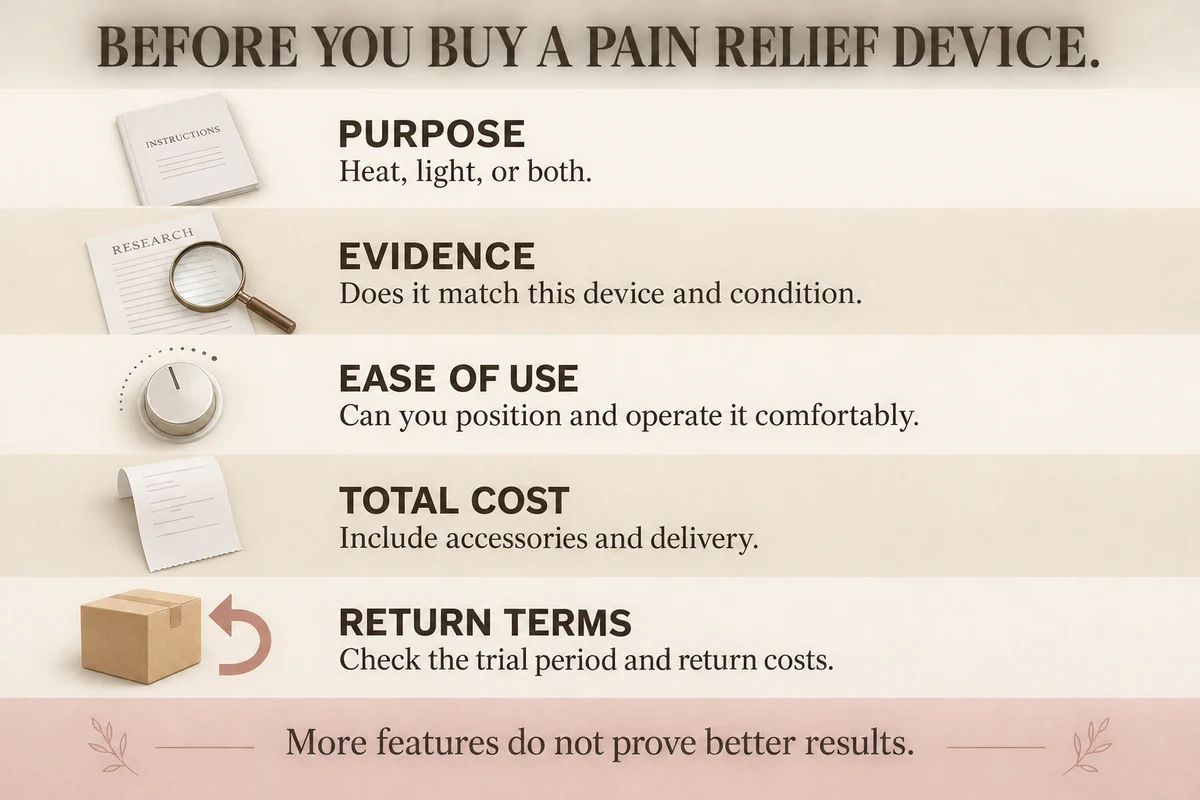
The purchase price is only part of the decision. Compare the total cost of:
- Any stand, mounting equipment or required eye protection.
- Shipping, taxes and return shipping.
- Replacement covers or other accessories.
- Clinic appointments and travel if you are comparing supervised treatment.
Then consider what using it actually involves. Can you reach the controls? Can you position it without an awkward twist? Does the shape suit the area you want to treat? Can you store it within easy reach?
A large panel might offer more coverage than you need. A wrap might fit a knee but be difficult to fasten with painful fingers. A simple pad might already meet your goal if that goal is comfortable warmth. If you want to compare specific home panels on their specifications, our red light therapy device reviews explain what to look for on a spec sheet.
The sensible purchase is one you can use safely and comfortably, with realistic expectations about what the evidence supports. A higher price is not an outcome measure.
How to make a useful decision
Start by naming the problem you want to improve. "My joints hurt" is understandable, but a more specific goal is easier to assess.
Examples include:
- Getting dressed with less hand stiffness.
- Standing from your usual chair more comfortably.
- Completing a familiar short walk with less discomfort.
- Settling in the evening without constantly changing position.
For familiar stiffness where heat is suitable, a low-cost warmth option may be a reasonable starting point. That is a judgment about simplicity and expense, not a claim that heat wins a clinical comparison.
If you are considering PBM, take the device information to a clinician or physical therapist familiar with your condition. Ask what benefit would be realistic, how the proposed treatment fits your care, and when you should review whether it is worth continuing.
Record everyday changes
Choose one familiar activity and note how it feels before and after using the treatment as directed. You could also record whether any comfort lasted beyond the session.
Keep brief notes about activity, sleep, medication changes and unwanted effects. You do not need a detailed spreadsheet unless you enjoy one.
The record can support a more useful conversation than "I think it helped." It cannot prove which part of a treatment caused a change. Do not stop prescribed care to make the comparison cleaner.
If a device is inconvenient, uncomfortable or making no meaningful difference, that is useful information too. You do not have to justify the purchase by continuing indefinitely.
Safety matters with both approaches
Using heat
Keep heat comfortably warm and follow the device instructions, including its cover and positioning requirements. Check your skin during use, stay awake and stop if the area becomes painful or irritated. Automatic shutoff is not permission to sleep with a heating pad.
Mayo Clinic advises limiting heating pad use to 20 minutes at a time to reduce burn risk. Follow a shorter limit if your product or clinician specifies one.
If you have reduced sensation, poor circulation or difficulty judging temperature, ask your clinician whether local heat is suitable before using it. Check with a pharmacist before applying heat over medicated creams or patches, because their instructions may prohibit it.
Using red or near-infrared light
Follow the specific device's distance, session length and frequency instructions. Do not assume that a longer exposure is better, or transfer instructions from a different panel.
The American Academy of Dermatology's guidance on home red light devices highlights light-sensitive conditions, medication interactions and the need to use the specified eye protection when directed. Although that guidance concerns skin treatment, those precautions are relevant when considering a light device. It does not establish joint-pain effectiveness.
If you are pregnant or breastfeeding, have a light-sensitive skin condition, take blood thinners, antidepressants or other medication that increases sensitivity to light, have diabetes, or are receiving treatment for a significant medical condition, have recent surgery or an unexplained painful area, ask your treating team before applying light there. Stop and seek advice if treatment causes persistent redness, skin discomfort or worsening symptoms.
When to get medical help
Seek urgent medical assessment for a painful joint that is hot and swollen, especially if you also have fever, chills or feel unwell. Severe pain after an injury or an inability to bear weight also needs prompt assessment. The NHS joint-pain guidance explains these warning signs.
Arrange an appointment if pain keeps returning, worsens or interferes with sleep and ordinary activities. Home devices cannot identify the cause.
This article provides general information and does not replace advice from a clinician who knows your condition. Talk to your doctor before starting heat or light therapy for joint pain if you are pregnant or breastfeeding, have diabetes, poor circulation or reduced skin sensation, take blood thinners, antidepressants or other medication that affects how your skin responds to heat or light, or have a condition being actively treated.
Frequently asked questions
- Is red light therapy just a heating pad with lights?
- PBM is intended to produce effects from light exposure without relying on substantial heating. A heating pad's purpose is warmth. Some products include both functions, so check the manual rather than judging by appearance or sensation.
- Is an infrared heating pad the same as a near-infrared panel?
- No. An infrared heating pad is a heat treatment. A near-infrared PBM panel delivers a specified light exposure. The word infrared alone does not establish that they use the same wavelengths, dose or treatment method.
- Which is better for knee arthritis?
- The evidence discussed here cannot name a proven winner between an ordinary heating pad and a home red light device. The useful choice depends on the diagnosis, desired benefit, safety, cost and the actual device being considered.
- Can I use heat and red light together?
- Do not assume separate devices can safely be combined. Use a combination product only according to its instructions and check with your clinician if you are unsure whether heat, light or both suit your condition.
- Should I buy a red light device if warmth already helps?
- There is no automatic need to upgrade. First identify what additional benefit you want and what evidence supports that particular product for your condition. Comfort, budget and ease of use deserve a place in the decision.
Choose a next step you can assess
Before buying anything, write down the everyday task you want to make easier. Then choose an appropriate option with a clear way to review its usefulness alongside your usual care.
If colder months are bringing more stiffness, continue with our guide to managing arthritis symptoms when the weather turns. It puts warmth and home devices into the wider picture of movement, routines and getting help when symptoms change.