
Why Pain Flares Happen and How Red Light May Help Cool the Fire
What may be driving a familiar flare, and where red light therapy may realistically fit.
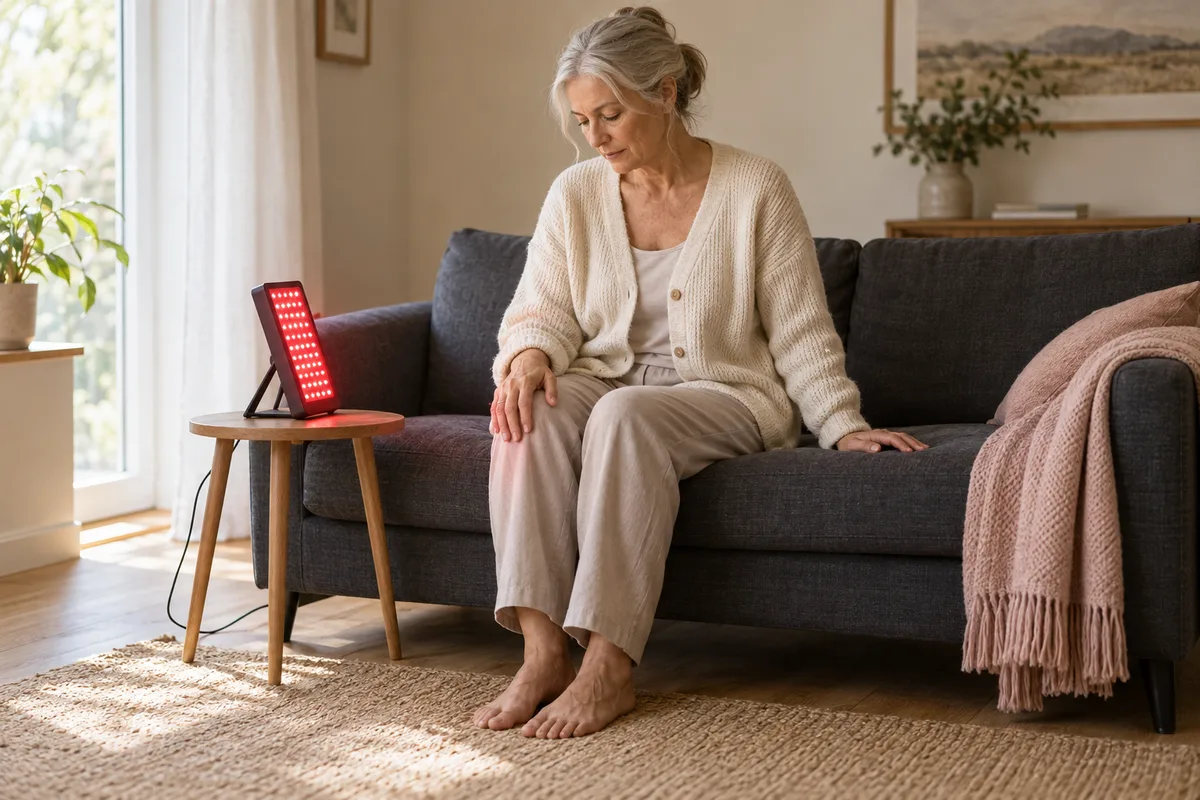
Yesterday, getting out of a chair was manageable. Today, the same movement makes you pause, brace yourself, and wonder what changed. For many people researching red light therapy inflammation reduction, an unpredictable flare like this is exactly what sent them looking for answers.
Pain flares can make ordinary life feel unpredictable. They also make promises of quick relief especially tempting, and those claims deserve a careful look. Certain light treatments have shown benefits for some painful conditions, but that does not mean a home panel can stop every flare.
Red light therapy may be a useful addition to a pain-management plan for some people. It has not been established as a reliable way to prevent recurring flares, and pain relief does not automatically prove that inflammation has fallen.
Not a miracle. Just one option worth a look.
If you're curious about trying red light therapy for a flare, RLT Home makes panels built for home use, a starting point if you would rather not research devices from scratch. A panel alone will not fix everything covered below.
See the panelsUnderstanding what may be driving a flare helps you decide what to do today, what to track, and where red light could reasonably fit.
What is a pain flare?
A pain flare is a temporary increase above your usual level of pain. It often affects a familiar area and feels like a more intense version of symptoms you already know. The National Cancer Institute's definition of a pain flare includes flares associated with arthritis, fibromyalgia, and other ongoing conditions.
There is no single timetable for every flare. Duration depends on the condition and what is happening around it. New pain, a different location, or unfamiliar symptoms need a fresh assessment rather than an automatic assumption that this is your usual problem.
A difficult day also does not mean you have failed. Flares can happen even when you follow your treatment plan carefully.
Why pain and inflammation do not always rise together
The idea of a fire captures how a flare can feel. However, the intensity of pain is not a reliable inflammation gauge.
Inflammation is part of the body's protective response to injury or illness. In some diseases, that response becomes persistent or misdirected. In rheumatoid arthritis, for example, immune activity causes inflammation in the joint lining and can damage joint tissues. Symptoms may worsen during periods of greater disease activity, as explained by NIAMS in its rheumatoid arthritis guidance.
Other pain conditions, including fibromyalgia, involve changes in how the nervous system processes pain signals rather than joint inflammation itself. A person can have substantial pain without the same joint inflammation seen in rheumatoid arthritis.
These mechanisms can also overlap. Having an inflammatory condition does not mean every painful day has exactly the same cause.
This matters when considering red light. An intervention that influences inflammatory processes may address one part of the problem. It does not necessarily address disturbed sleep, nerve-related pain, an unsuitable activity pattern, or a disease that needs treatment adjustment.
Common triggers that can build toward a flare
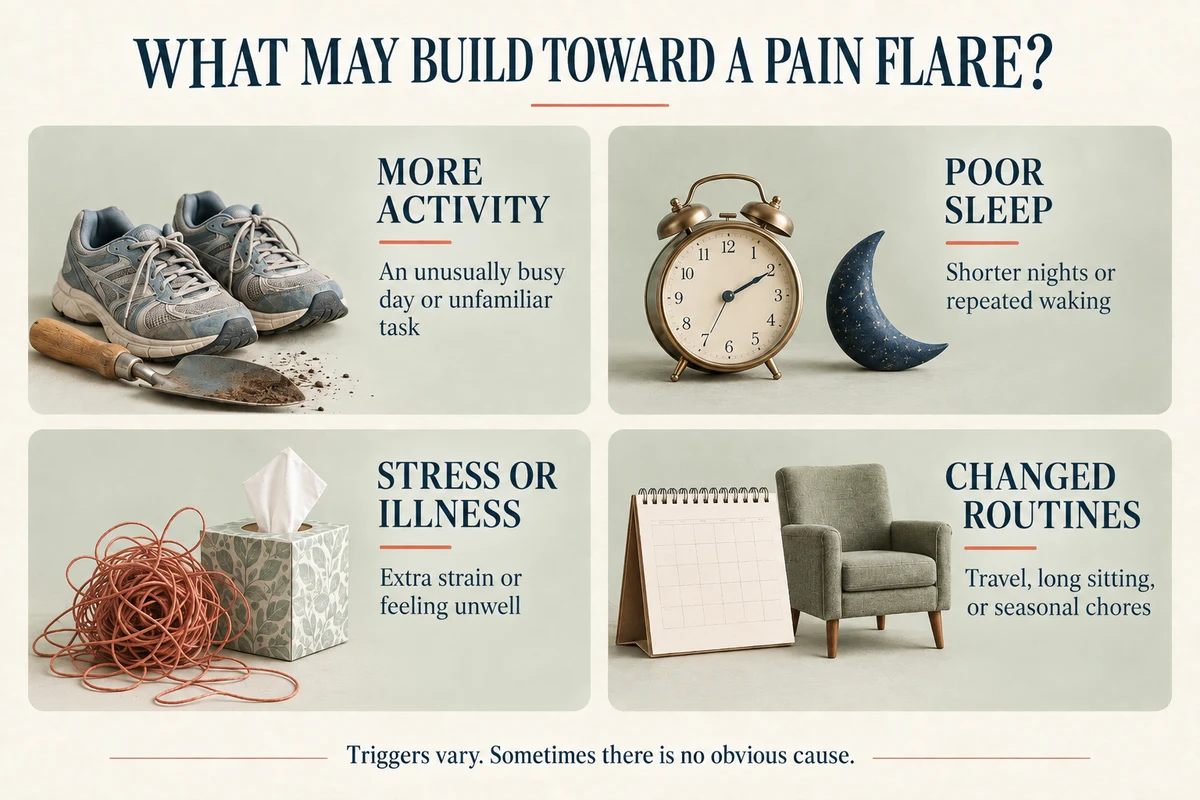
Sometimes there is an obvious explanation. Sometimes several small changes coincide. And sometimes you cannot find a trigger at all.
Doing more on a good day
When symptoms ease, catching up feels sensible. You do the shopping, tackle the garden, and finish the cleaning because you finally can.
For some people with persistent pain, that jump in activity is followed by a difficult recovery period. Longer stretches in one position or an unfamiliar task can also matter. Changes in activity, stress, sleep, and prolonged time in one position are commonly identified as possible contributors to a flare.
The useful question is specific: what was different from your usual manageable day? "I stood at the kitchen counter much longer than usual" gives you something to adjust next time.
Poor sleep
A restless night can leave the next day feeling harder before it has properly begun.
In a daily diary study of people with chronic pain and insomnia, sleep quality predicted pain during the first half of the next day. The relationship was more complicated than a simple, equal two-way cycle.
That finding supports paying attention to sleep alongside pain. It does not mean you can sleep your way out of every flare, or that disrupted sleep is your fault.
Stress, illness, and treatment changes
Stress and illness can accompany pain flares. If symptoms regularly return as pain medicine wears off, that is useful information for your prescriber. Do not make dose changes on your own.
For rheumatoid arthritis specifically, NIAMS lists stress, infection, excess activity, and suddenly stopping medication among possible flare triggers. An inflammatory disease flare may need a different response from soreness after an unusually busy day.
Seasonal changes in routine
Autumn and winter can change the shape of a day: longer periods indoors, fewer outdoor walks, travel, and bursts of seasonal chores.
If you notice a pattern, record those changes as well as the weather. For a closer look at that separate question, read Does Cold Weather Affect Arthritis?
You do not need to identify a perfect explanation before taking sensible steps to manage a familiar flare.
Red light therapy inflammation reduction: what the evidence shows
Red light therapy is commonly discussed under the research term photobiomodulation, or PBM. It uses particular wavelengths of light, often red or near-infrared, delivered through a laser or LED device.
Researchers are investigating how absorbed light changes cellular signaling, including processes involved in energy production and inflammation, though the exact mechanisms are still being worked out.
That is a biological rationale for research. It is not proof that every advertised device reduces inflammation in every person.
There are encouraging findings for knee osteoarthritis
A 2019 review of 22 placebo-controlled trials involving 1,063 participants found that low-level laser therapy reduced pain and disability in knee osteoarthritis. Results depended on treatment parameters, with stronger findings in groups receiving doses consistent with the recommendations used by the review.
That gives a reasonable basis for discussing PBM as a possible addition to care for this particular condition. It does not establish that a consumer panel has the same effect, or that it prevents future flares.
The broader evidence remains uneven
More recent, broader reviews of photobiomodulation research have found benefits for some outcomes, but much of the evidence remains low or very low certainty, even where individual trials look promising. Confidence is stronger for some outcomes, such as disability linked to knee osteoarthritis, than for others.
Its practical message is measured: PBM has potential, while treatment protocols and confidence in the results still vary.
Less pain is not the same as measured inflammation reduction
A study can report a lower pain score without showing that inflammatory activity has changed. Pain, walking ability, joint swelling, and laboratory markers are different outcomes.
Likewise, evidence from cells or animals cannot tell us exactly how much relief an older adult will get from a home device. A trustworthy claim needs to match the condition, device, dose, and outcome actually studied.
"May improve symptoms in some circumstances" is a useful possibility. "Switches off chronic inflammation" goes beyond what these findings establish.
Considering a panel for yourself?
If the research above has you interested, RLT Home's range is a reasonable place to start looking. It will not replace your prescribed care, and results vary person to person.
Browse RLT Home panelsWhy consistent use matters, and what it cannot promise
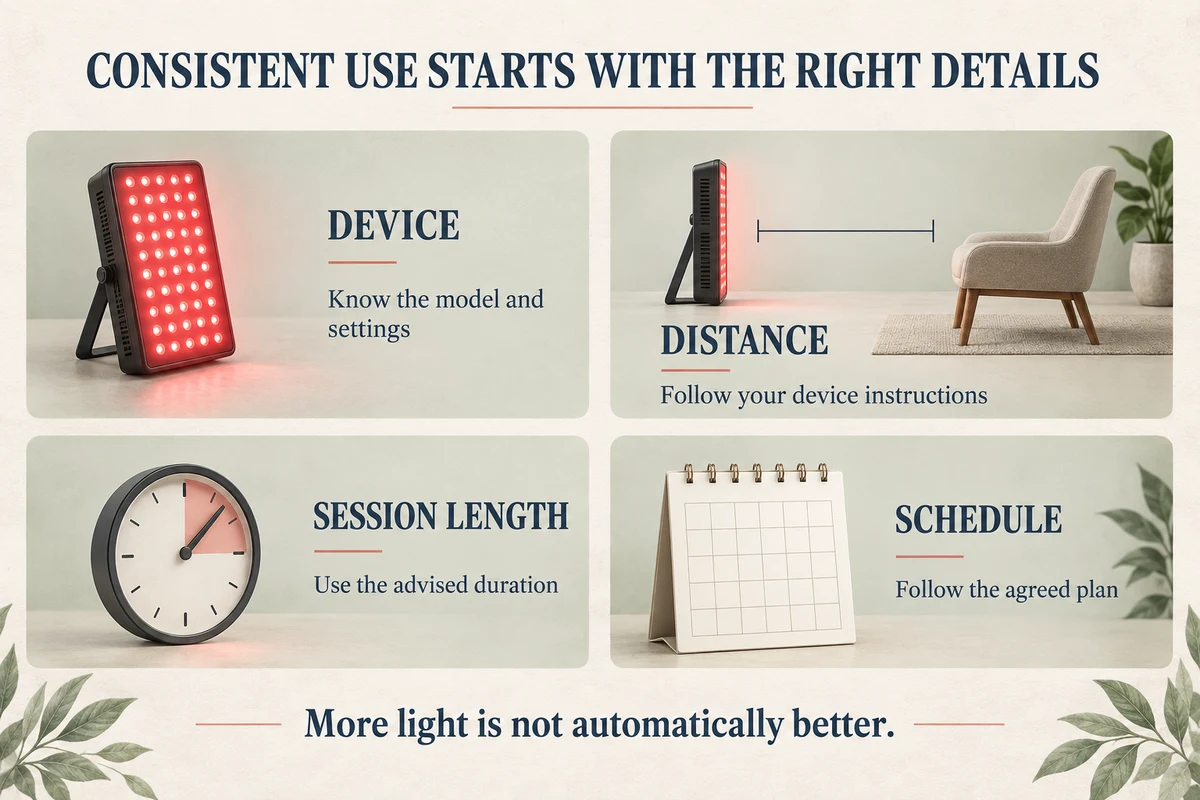
PBM research commonly tests a planned course of treatment. That is different from trying an occasional session whenever pain becomes difficult.
For example, one placebo-controlled knee osteoarthritis trial used a specific wavelength of laser light several times a week for a set number of weeks, applied at specific points with a measured dose. The active-treatment group improved on several measures, including pain.
That schedule describes one study. It is not a home-use prescription. A panel used at a distance cannot be treated as interchangeable with a laser applied directly to the skin.
Consistency is useful when it means following an appropriate protocol and checking the results. It does not mean using a device every day regardless of its instructions, discomfort, or lack of benefit.
More light is not automatically better
PBM research describes a dose response in which increasing exposure beyond a useful range can reduce the benefit. Session length is only one part of the dose. Output, treatment area, distance, and wavelength also matter.
Follow instructions for your particular device and the advice of a clinician familiar with your condition. Do not double a session because you missed yesterday, move closer to make it stronger, or extend treatment because a flare is worse.
There is no established universal maintenance schedule that prevents pain flares. If an agreed trial is not helping, review the plan instead of assuming that success requires more exposure.
A practical plan for a familiar pain flare
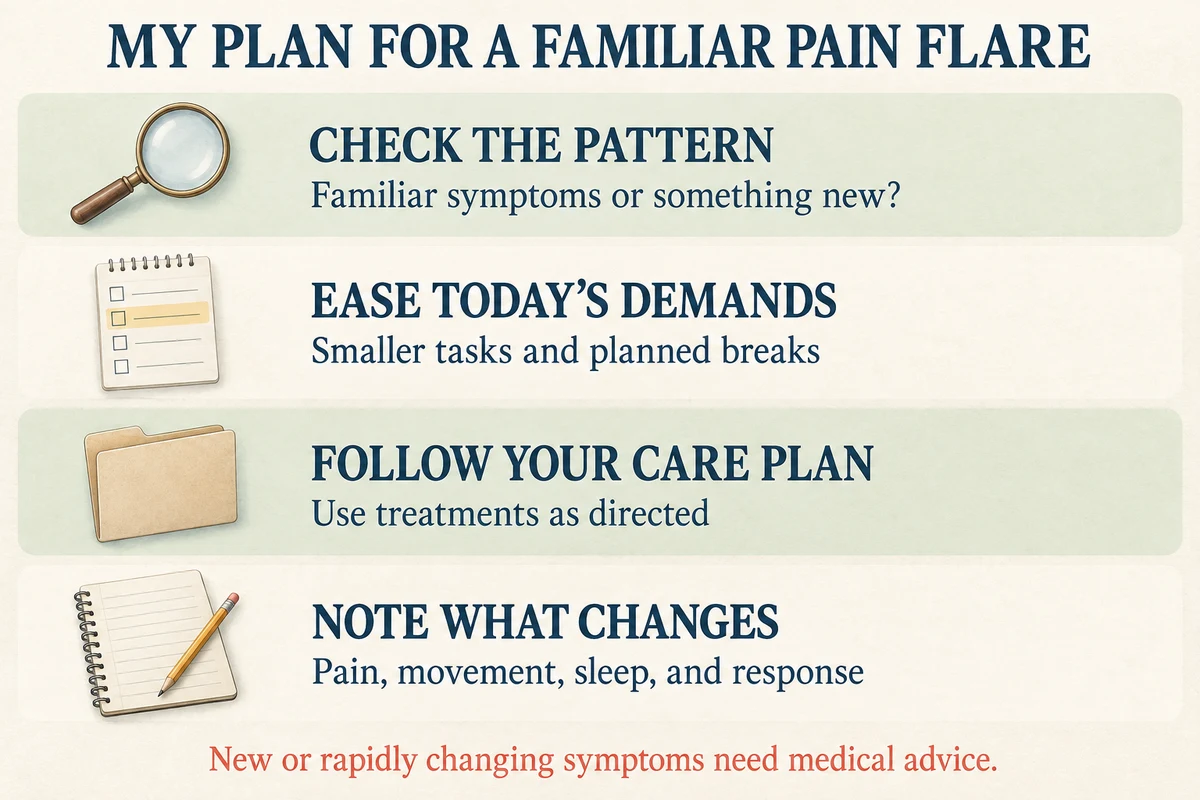
The following steps are for symptoms you recognize and have already discussed with your healthcare team. New or rapidly changing pain belongs in the assessment section below.
1. Reduce today's demands
Choose what genuinely needs doing. Divide larger tasks into smaller parts and ask for help with the jobs that are difficult today.
Planning for a flare in advance is a common recommendation in chronic pain care: pacing yourself, shorter and more frequent rests, familiar comfort strategies, and support from other people.
Your plan can be simple: who can collect the groceries, which appointment can wait, and what you can prepare without a long period of standing.
2. Use movement and rest that suit your condition
For familiar musculoskeletal pain, gentle movement and changes of position may be more manageable than a normal exercise session. Follow any restrictions from your clinician, especially after injury or surgery.
For back pain, the NHS advises avoiding prolonged bed rest and remaining active where possible. Stop exercises that worsen the pain and seek advice.
The aim during a flare is a tolerable level of activity. You do not need to prove that you can push through it.
3. Follow the treatment plan you already have
Use prescribed medication and any agreed rescue treatment as directed. Ask your clinician or pharmacist if the plan is no longer giving adequate relief.
If red light therapy is already an appropriate, tolerated part of that plan, follow its existing instructions. A flare is not a reason to improvise a stronger dose. If you have never used PBM, establish whether it is suitable before adding it during an unexplained pain episode.
4. Write down enough to make the next conversation useful
Keep the record brief. You need useful observations, not another demanding task.
| What to note | A practical example |
|---|---|
| Pain and location | Is this the familiar ache, or something different? |
| Daily function | Was getting dressed, walking, or using the stairs easier or harder? |
| Sleep | Were there more awakenings or less sleep than usual? |
| Recent activity | Was there an unusual task, long journey, or busy day? |
| Treatment | Which prescribed treatments or device sessions did you use? |
| Response | What happened afterward and the following day? |
If you use a device, record its model, settings, distance, and session length. "Used the panel" is less useful than knowing what you actually did.
For the sleep part, our guide to keeping a sleep diary explains which details are worth recording.
How to judge whether red light is helping
Choose a goal that matters to you before starting an agreed trial. It might be getting out of a chair more comfortably or completing your usual short walk with less difficulty.
Compare several days rather than judging the treatment by one session. A flare may settle naturally, and other treatments or changes in activity may contribute to improvement.
These are practical ways to review your experience, not a method of proving that PBM caused a change:
- Look for improvement that repeats.
- Include function as well as pain scores.
- Record changes in medication, activity, and sleep.
- Note irritation or any worsening after sessions.
- Agree with your clinician when to review whether continuing makes sense.
A device should earn its place in your routine through a useful benefit. If you see no meaningful improvement, that is a reason to reassess.
When to pause home treatment and get advice
Check suitability before using red light if you have a light-sensitive condition or take medication that increases light sensitivity. Use the eye protection specified by the device instructions. The American Academy of Dermatology's safety guidance also notes that irritation and mild pain can occur, and that long-term safety questions remain.
Stop a session if it causes burning, irritation, or increased pain. Feeling worse is not evidence that a device is "detoxing" your body or that you need to push through.
If you have cancer or are receiving cancer treatment, ask your oncology team before using a home device, particularly over an affected area. New or changing pain needs their assessment.
Seek urgent medical help for a suddenly very painful, hot, swollen joint, especially if you feel unwell or cannot put weight on it. These can be signs of a joint infection, even without a fever.
Seek emergency care for back pain with new loss of bladder or bowel control, numbness around the groin, or weakness or numbness in both legs. The NHS lists these among back-pain emergency symptoms.
Pain that keeps worsening, changes character, or repeatedly disrupts sleep also deserves review. Calling it a flare should never close the door on further assessment.
This article is for general information and is not medical advice. Pain flares vary widely between people and conditions, and what helps one person may not suit another. Talk to your doctor before starting red light therapy or changing how you manage a flare, especially if you have a light-sensitive condition, take medication that increases light sensitivity, are pregnant or breastfeeding, or are receiving treatment for cancer.
Frequently asked questions
- Does red light therapy reduce inflammation immediately?
- An immediate anti-inflammatory effect should not be assumed. Human pain studies often assess outcomes after a full treatment course, sometimes several weeks, not a single session. Feeling better right after a session does not, by itself, show that inflammation has decreased. A fair test compares several sessions against your usual pattern, not one visit.
- Can consistent red light therapy prevent future pain flares?
- That has not been established across chronic pain conditions. Following an appropriate, agreed schedule can help you judge whether a treatment is genuinely helping, rather than assuming any single session should stop a flare before it starts. Flare prevention itself remains an unproven promise for home panels, so treat consistent use as a fair trial, not a guarantee.
- How often should I use red light therapy for inflammation?
- There is no universal frequency that applies to every person or device. The condition being treated, the device output, the distance from skin, and the treatment area all affect what a reasonable protocol looks like. Follow the directions that come with your specific device and any clinical advice, rather than borrowing a schedule from a different product or study.
- Is red light therapy the same as a heat treatment?
- PBM aims to produce biological effects through absorbed light. It does not depend on heating tissue in the way a heat pack does, although a device may feel warm. Stronger warmth does not tell you that treatment is working better.
- Can I replace arthritis medication with red light therapy?
- Do not stop prescribed treatment because you start PBM. In inflammatory arthritis, controlling disease activity with your prescribed medication protects the joint itself, which light alone cannot do. If you are managing well and want to add red light therapy, discuss it as a possible addition with your treating clinician, not a replacement for existing care.
Make the next difficult day easier to handle
Start by writing a short flare plan while your symptoms are manageable: what usually helps, which tasks you can simplify, and who to contact if the pattern changes.
Red light therapy may have a place in that plan. Its value depends on whether it is appropriate for your condition and brings a benefit you can actually notice in daily life.
If you want to explore the wider topic, read our red light therapy benefits guide, then discuss the options with your healthcare professional.