
What Causes Sleepwalking in Adults (And Why Some Medications Can Trigger It)
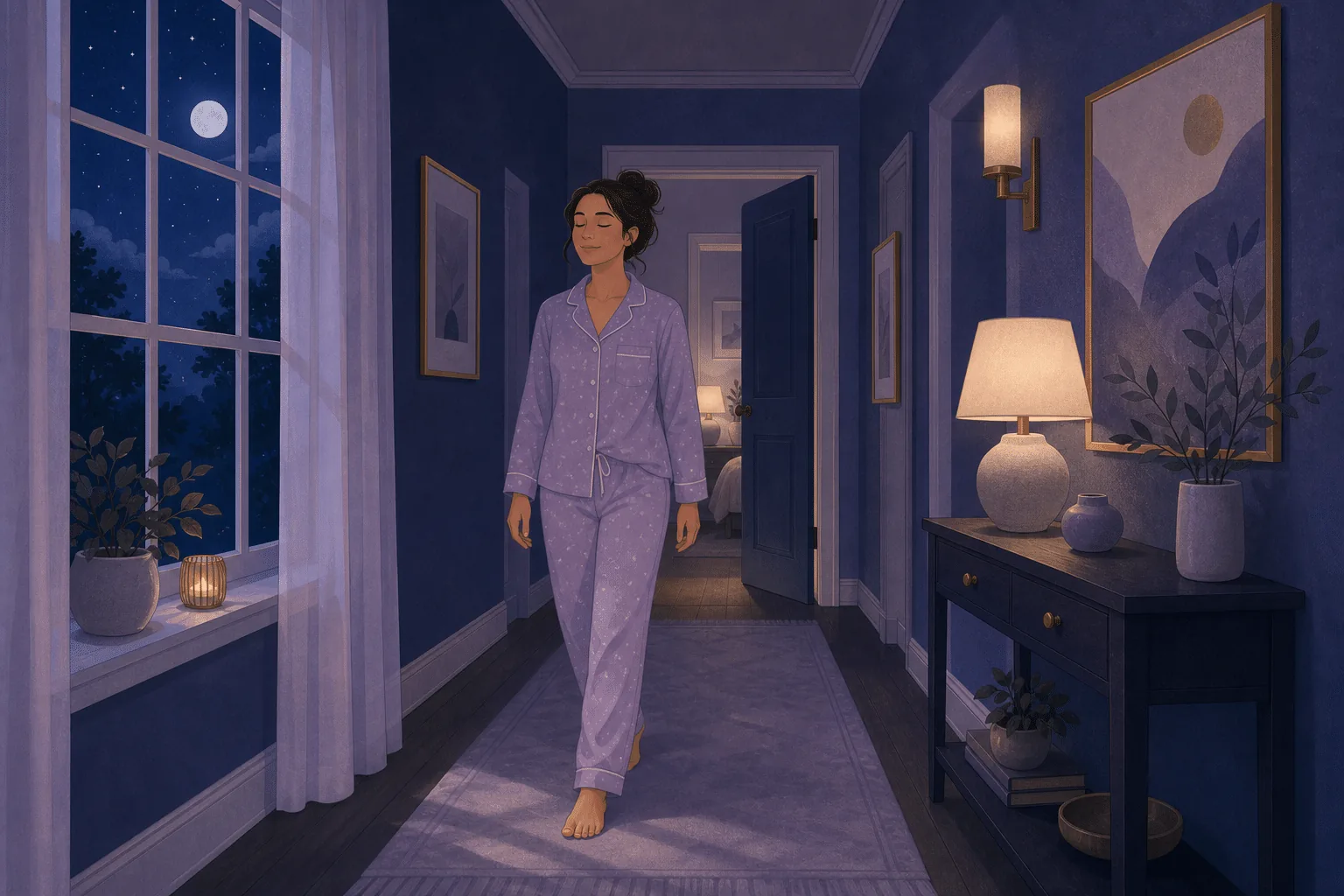
You went to bed in your own room and woke up on the couch. Or your partner mentions a whole conversation you have no memory of. If that sounds familiar, you are not losing your grip, and you are not alone.
A Stanford-led study of nearly 20,000 Americans found that about 3.6 percent of adults, or roughly 8.4 million people, sleepwalk in a given year, and around 1 percent do it twice a month or more. Understanding what causes sleepwalking takes a lot of the fear out of it. This guide covers what happens in the brain, the most common triggers in adults, and why some medications can set it off.
What Causes Sleepwalking in the Brain
Sleepwalking, technically called somnambulism, happens during deep NREM sleep, stage 3, the slow-wave stage when your brain is furthest from waking. Our guide to the 4 stages of sleep maps out how a night is structured.
During an episode, the brain's movement centers switch partially on while the rest stays deeply asleep. That mismatch is the core of what causes sleepwalking. You can walk, open doors, even talk, yet stay unconscious and remember nothing. Episodes cluster in the first few hours of the night, when slow-wave sleep is most concentrated.
Why do kids sleepwalk more than adults? Children spend more time in slow-wave sleep and most grow out of it by their teens. Hormonal shifts during puberty, pregnancy, and menstruation have also been linked to higher rates. If your child is affected too, our article on sleep problems in children covers what is normal at each age.
Common Triggers for Sleepwalking in Adults
Sleepwalking in adults rarely appears out of nowhere. Usually something specific sets it off or makes it worse. The most common sleepwalking causes include:
- Sleep deprivation: when you are badly short on sleep, your body rebounds with deeper, more intense slow-wave sleep, raising the risk of an episode
- Stress and anxiety: both are consistently linked to more frequent sleepwalking
- Fever or illness: being sick can disrupt normal sleep cycling
- Alcohol: it suppresses REM sleep and can push more of the night into the slow-wave stage
- Family history: if a parent or sibling sleepwalks, your risk is much higher, with research suggesting the rate in first-degree relatives is at least tenfold that of the general population
Why do people sleepwalk as adults when they never did as kids? Usually because these triggers stack. A stressful month plus a run of short nights is a far stronger setup than either alone.
Free guide: If short, restless nights are your trigger, grab the free Health Bandit guide for natural ways to sleep deeper and more consistently.
Medications That Cause Sleepwalking
Here is the part fewer people know about. Certain prescriptions can trigger or worsen episodes, so medications that cause sleepwalking are a fair question if yours started recently.
The main classes linked to sleepwalking are:
- Sedative-hypnotics (sleeping pills): in April 2019 the FDA added its strongest boxed warning to zolpidem (Ambien), eszopiclone (Lunesta), and zaleplon (Sonata) after tying them to complex sleep behaviors like sleepwalking and sleep driving. the agency counted 66 cases of serious injury or death over 26 years
- Antidepressants and anti-anxiety medications: the same Stanford study found people taking SSRI antidepressants were about three times more likely to sleepwalk twice a month or more
- Antipsychotics: these can alter brain activity that may contribute to sleepwalking
- Beta-blockers: used for heart conditions and blood pressure, these can affect sleep architecture and have been tied to sleepwalking
Not everyone who takes these will sleepwalk, and the risk varies by person. If your episodes began after a new prescription, tell your prescriber and let them weigh the options, whether a dose change or a different drug. Never stop a prescribed medication on your own.
When to Get Help
Occasional sleepwalking with an obvious cause, like one bad night of sleep, usually needs no medical attention. See a doctor if episodes happen more than once or twice a month, if you leave the house or risk injury, if you are very sleepy by day, or if things keep getting worse.
It is also worth an appointment when episodes begin after a new prescription, since that is often one of the simpler triggers to address. A doctor can check for an underlying sleep disorder and may recommend a sleep study. The Mayo Clinic sleepwalking overview covers what causes sleepwalking and when to seek care.
FAQ
How do I know if I sleepwalked?
Look for indirect evidence. You might wake in a different room, find lights on or objects moved, or feel groggy after a full night in bed. Most often someone in your household tells you, and since you rarely remember an episode yourself, that report is the most reliable sign.
How can I stop sleepwalking?
Start with the triggers, since short or disrupted sleep sits behind many sleepwalking causes in adults. Keep a steady sleep schedule, manage stress, and skip alcohol near bedtime. Review prescriptions with your doctor if the timing fits, and ask about a sleep study if episodes continue.
In the meantime, make the route safe. Lock doors and windows, gate stairs, clear the path between bedroom and bathroom, and keep sharp items out of reach.
Should you wake a sleepwalker?
Gently guiding them back to bed works better than waking them. Someone pulled abruptly out of deep sleep can be confused or startled. Speak softly, steer them calmly, and avoid sudden noise. Most episodes end on their own within minutes.
If sleep quality is something you are working on, the Health Bandit guide looks at natural approaches worth exploring.